
Three Pagodas Pass
ด่านเจดีย์สามองค์ · Kanchanaburi Province
Best Season
November to February
Score
7 / 10
Elevation
1,400 m
Area
3,349 km²
About Three Pagodas Pass
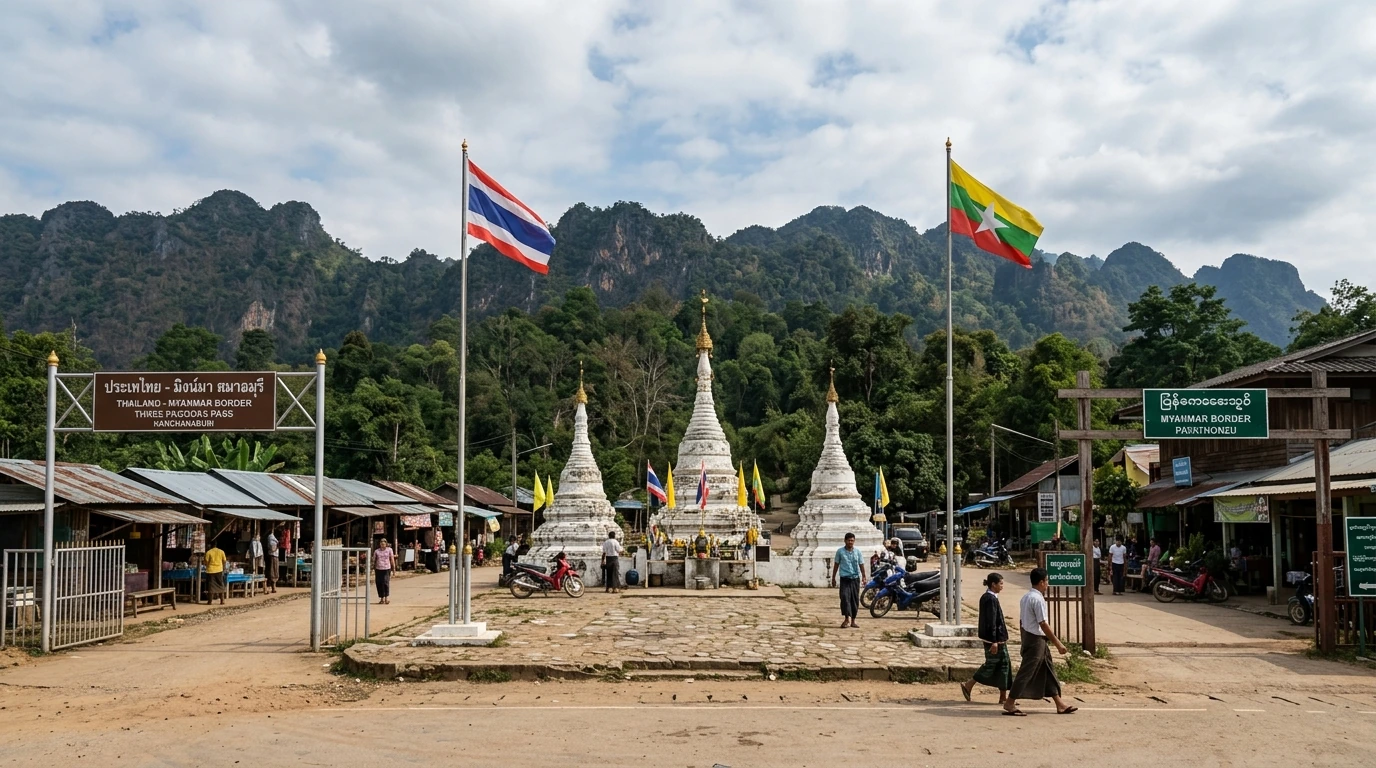
Three Pagodas Pass (Dan Jedi Sam Ong) is a historically significant mountain pass on the Thailand-Myanmar border, named for three small white chedis marking the border point. This is the route through which armies, traders, and refugees have passed for centuries — most infamously, it was the planned terminus of the Japanese Death Railway in WWII.
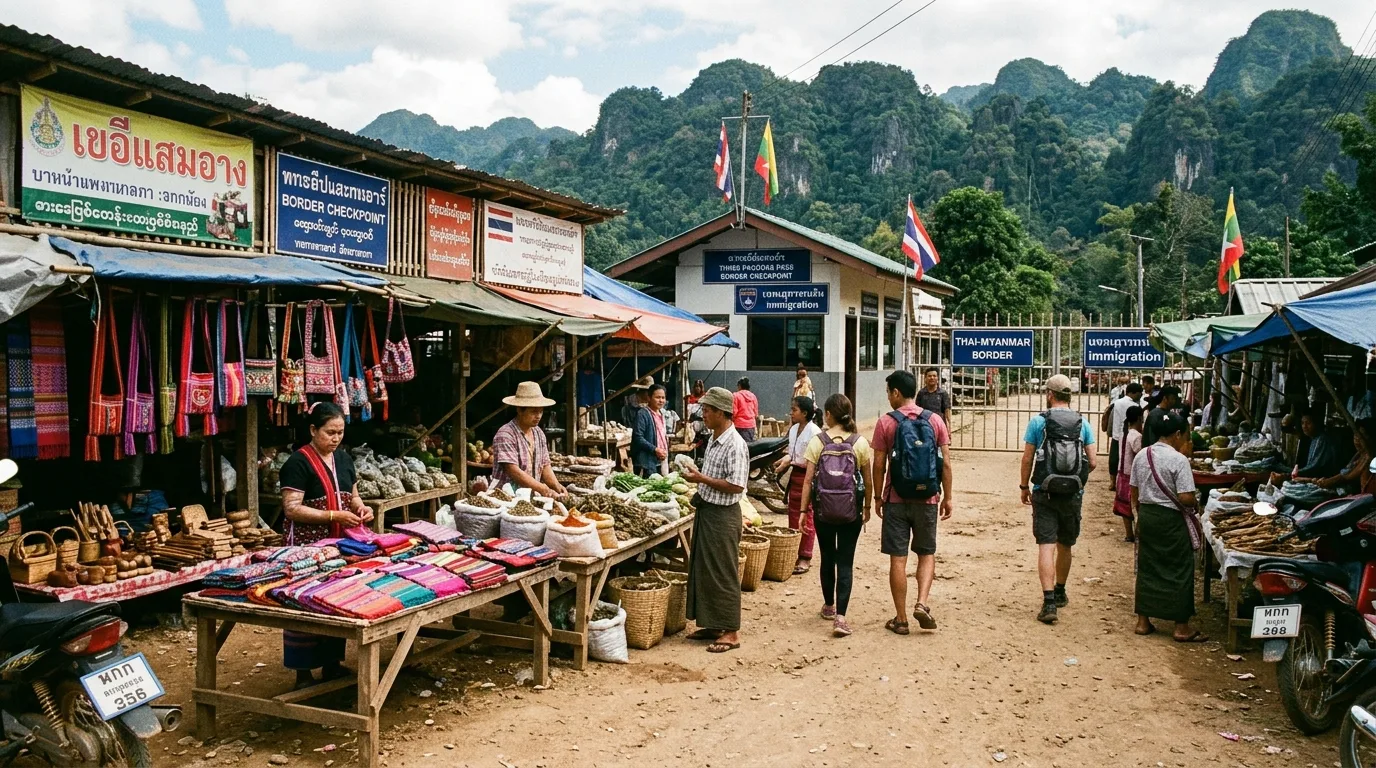
Today, the pass itself is modest (three small whitewashed pagodas), but the journey to get there through remote Kanchanaburi Province is the real attraction. The nearby town of Sangkhlaburi, set on a reservoir with a sunken temple and Thailand's longest wooden bridge, is the highlight for most visitors. The area has a distinct Mon, Karen, and Burmese cultural character unlike anywhere else in Thailand.
The border crossing status varies — it opens and closes depending on political conditions in Myanmar's Karen State. Most visitors base themselves in Sangkhlaburi and visit the pass as a day trip.
Historical Note
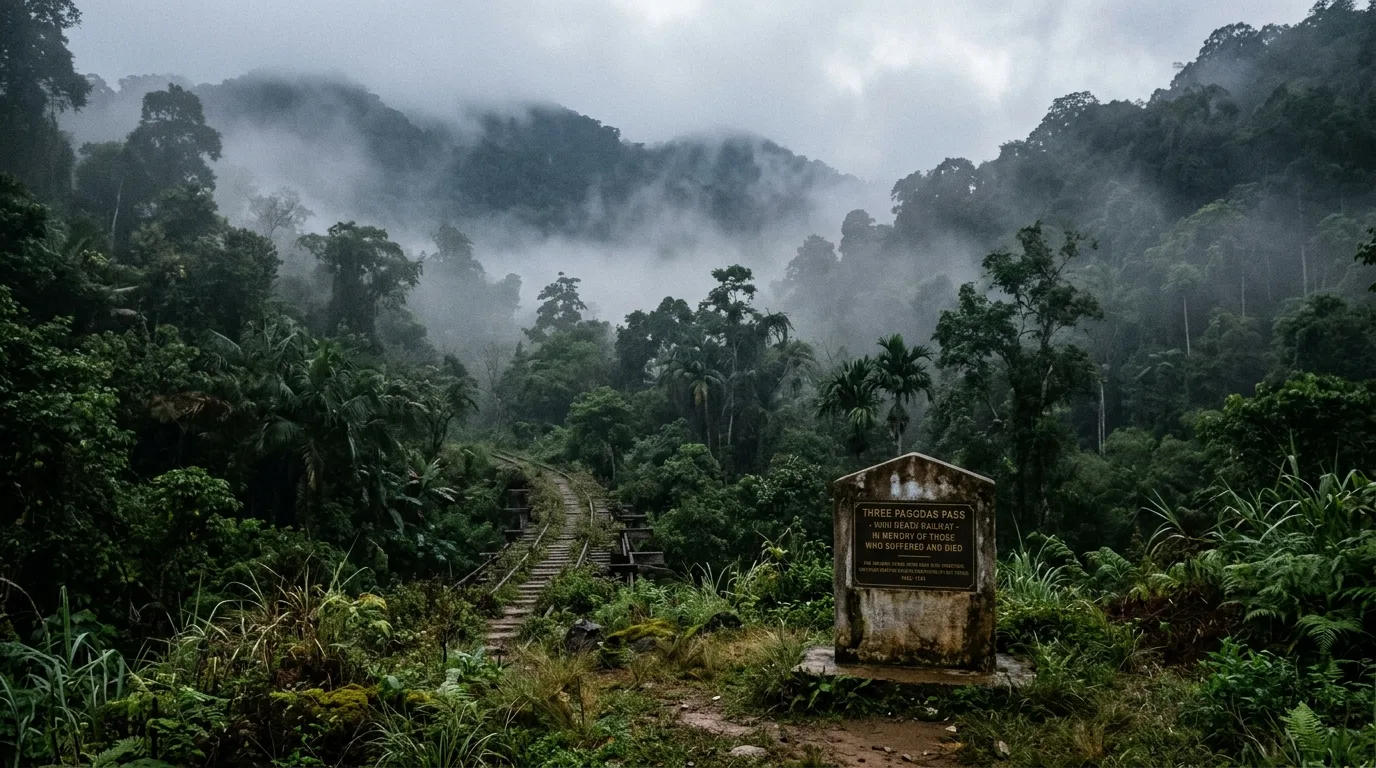
The pass was the planned terminus of the WWII Death Railway, built by Allied POWs and conscripted Asian laborers. The route has been used by armies, traders, and refugees for centuries. The border crossing has opened and closed multiple times over the years.
Best time to visit: November to February
At a Glance
Thai Name
ด่านเจดีย์สามองค์
Province
Kanchanaburi
Region
Western
Area
3,349 km²
Elevation
1,400 m
Costs
Typical prices you'll encounter when visiting Three Pagodas Pass. Grouped by category.
food
| Item | Low (THB) | High (THB) |
|---|---|---|
| Street food meal | 30 | 60 |
| Restaurant meal | 60 | 200 |
| Coffee | 30 | 50 |
| Large beer | 50 | 70 |
| Water 1.5L | 10 | 15 |
accommodation
| Item | Low (THB) | High (THB) |
|---|---|---|
| Budget guesthouse per night | 300 | 700 |
| Mid-range hotel per night | 800 | 2,000 |
| Boutique resort per night | 2,500 | 5,000 |
| Mon village homestay | 200 | 500 |
transport
| Item | Low (THB) | High (THB) |
|---|---|---|
| Songthaew to Three Pagodas Pass | 50 | 50 |
| Motorbike rental per day | 200 | 300 |
| Longtail boat tour | 500 | 1,500 |
entertainment
| Item | Low (THB) | High (THB) |
|---|---|---|
| Trekking guide (full day) | 800 | 1,500 |
| Laundry per kg | 30 | 40 |
Weather & Climate
November to February for cool, clear weather (15-28°C). February to May for the best views of the sunken temple as water levels drop. The road can be challenging in heavy rain (September-October).
| Month | High °C | Low °C | Rain (mm) | Humidity |
|---|---|---|---|---|
| Jan | 28 | 15 | 5 | 55% |
| Feb | 31 | 17 | 10 | 50% |
| Mar | 34 | 20 | 25 | 50% |
| Apr | 35 | 23 | 65 | 58% |
| May | 33 | 23 | 170 | 70% |
| Jun | 31 | 23 | 190 | 76% |
| Jul | 30 | 22 | 240 | 80% |
| Aug | 30 | 22 | 270 | 82% |
| Sep | 30 | 22 | 290 | 83% |
| Oct | 30 | 21 | 170 | 78% |
| Nov | 29 | 18 | 45 | 65% |
| Dec | 27 | 15 | 10 | 55% |
Things to Do
Three Pagodas border visit
เจดีย์สามองค์
Three small whitewashed pagodas marking the Thailand-Myanmar border — historically significant but physically modest.
Mon Bridge (Saphan Mon)
สะพานมอญ
Thailand's longest wooden bridge in nearby Sangkhlaburi, crossing the reservoir to the Mon village.
Sunken temple boat tour
Longtail boat tour to the partially submerged old temple in the Vajiralongkorn Reservoir.
Wat Wang Wiwekaram (new)
วัดวังก์วิเวการาม
Large Mon-style temple in Sangkhlaburi with a golden chedi modeled on Bodhgaya.
Mon Village exploration
Cross the wooden bridge to explore the distinct Mon community with its own temples, market, language, and customs.
WWII Death Railway history
The pass was the planned terminus of the WWII Death Railway. Memorial markers in the area honor those who died during construction.
Khao Laem National Park
Surrounding forest with waterfalls, trails, and wildlife around the reservoir.
Food Nearby
อาหารมอญ
Mon cuisine
Distinct from Thai food with fermented ingredients, different curry pastes, and raw vegetable plates.
30-60
Sangkhlaburi morning market
ข้าวแตน
Khao Taen (puffed rice cakes)
A Mon specialty — light, crunchy puffed rice cakes sold at the morning market.
10-30
Morning market stalls
ขนมจีนมอญ
Kanom Jeen Mon style
Rice noodles with a distinctive rich Mon fish curry, different from Thai versions.
30-50
Morning market
ปลาเผา
Grilled lake fish
Fresh fish from the Vajiralongkorn Reservoir, grilled or in spicy soup.
60-150
Lakeside restaurants in Sangkhlaburi
Night Markets
- Sangkhlaburi Night Market
Where to Stay
Hostel Dorm
200 - 350
THB / night
Budget Hotel
300 - 700
THB / night
Mid-Range
800 - 2,500
THB / night
Luxury
2,500 - 5,000
THB / night
Best Areas to Base Yourself
Booking Tip
Stay in Sangkhlaburi and day-trip to the pass. Low demand means walk-in availability is usually fine except Thai holidays.
Getting There from Bangkok
Bus to Kanchanaburi + bus to Sangkhlaburi
6.5-8 hours
250-450 THB
Drive
6-7 hours
Fuel ~1,500 THB
Festivals & Events
Songkran with Mon traditions
สงกรานต์
Mon community celebrates Songkran with traditional Mon rituals alongside Thai traditions.
End of Buddhist Lent
Boat races and religious ceremonies at Mon temples marking the end of Buddhist Lent.
Mon cultural festivals
Traditional Mon festivals in the community — check locally for exact dates.
Practical Info
Hospital
Sangkhlaburi Hospital
Best SIM Provider
AIS
ATM Availability
Limited
Language Tip
Thai, Mon, Karen, and Burmese spoken. Minimal English outside guesthouses.
Drinking Water
Do not drink tap water. Bottled water available.
Tipping Culture
Not expected
7-Eleven Density
Sparse
Emergency Numbers
Tourist police 1155, Emergency 191
Nearby Attractions
Frequently Asked Questions
Is it worth the long drive?
If you are interested in off-the-beaten-path Thailand, Mon culture, and WWII history — yes. Sangkhlaburi and the Mon village are unlike anywhere else in Thailand.
Can I cross into Myanmar?
The border has been intermittently open and closed for years. Check with your guesthouse for the latest status. Do not make crossing the sole reason for your trip.
When is the sunken temple most visible?
February to May when reservoir water levels are lowest. In the rainy season it may be completely submerged.
How long should I stay?
2-3 nights in Sangkhlaburi is ideal. Day 1: Mon village and wooden bridge. Day 2: boat tour and Three Pagodas Pass. Day 3: morning market, depart.
Is this area safe?
The Thai side is safe for tourists. Sangkhlaburi is a peaceful small town. Follow common sense and local advice regarding border areas.