
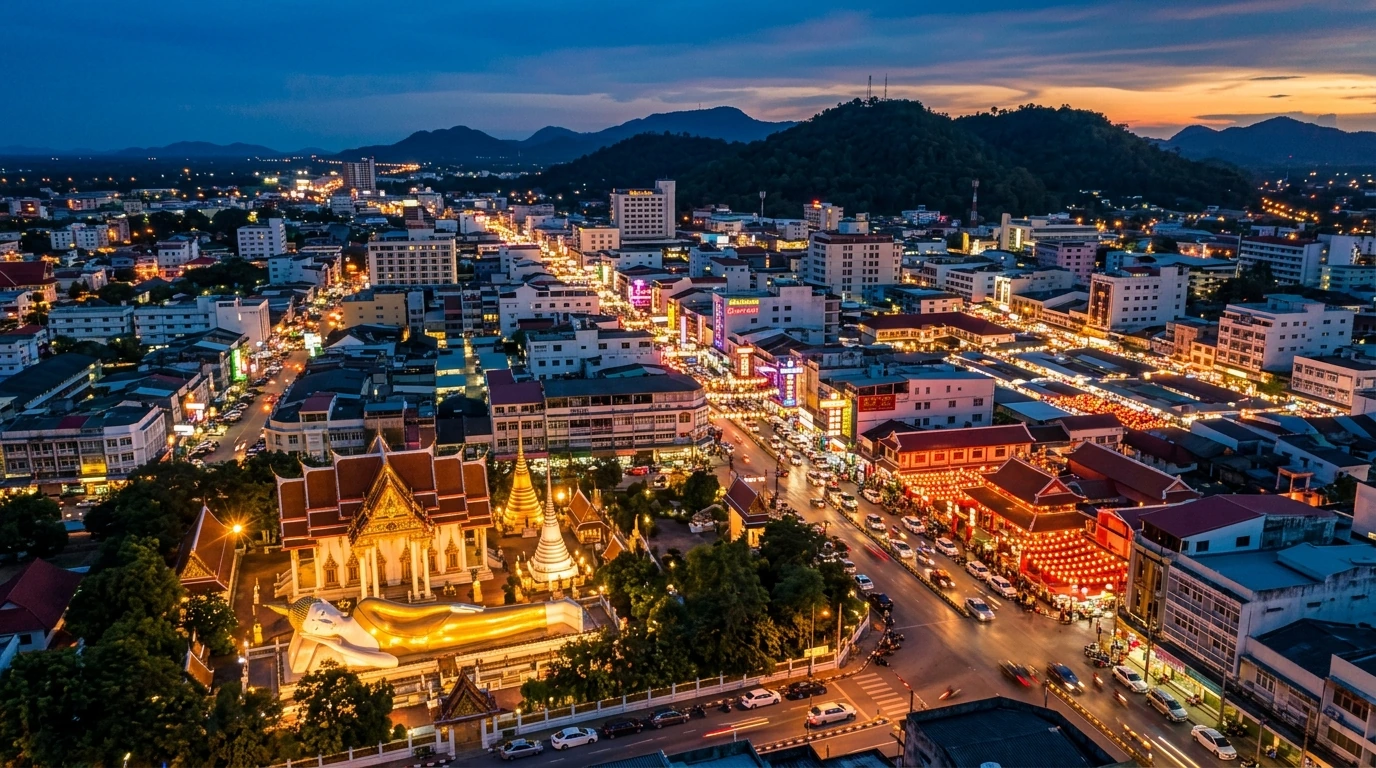
Hat Yai
หาดใหญ่ · Songkhla Province
Population
159K
Budget / Month
$370
Internet
90 Mbps
Best Season
February to May (drier months)
About Hat Yai
Hat Yai is the largest city in southern Thailand and the economic engine of the border region, a sprawling commercial hub that owes its existence to the railway and its prosperity to cross-border trade. Though technically just a district within Songkhla Province, Hat Yai dwarfs the provincial capital in size, energy, and importance. It is the kind of city that few foreign tourists ever plan to visit, yet those who stop discover a place with some of the best food in Thailand and a cultural texture unlike anywhere else in the country.
The city's identity is fundamentally shaped by its Chinese-Thai community. Hokkien and Teochew immigrants arrived with the railway in the early 20th century and built Hat Yai into a commercial powerhouse. Their legacy is everywhere — in the dim sum restaurants that open at dawn, the ornate Chinese shrines, the gold shops lining Niphat Uthit roads, and the Hokkien dialect that still echoes through the market halls. Hat Yai's dim sum is widely considered the best in Thailand, rivalling even Hong Kong for quality and value.
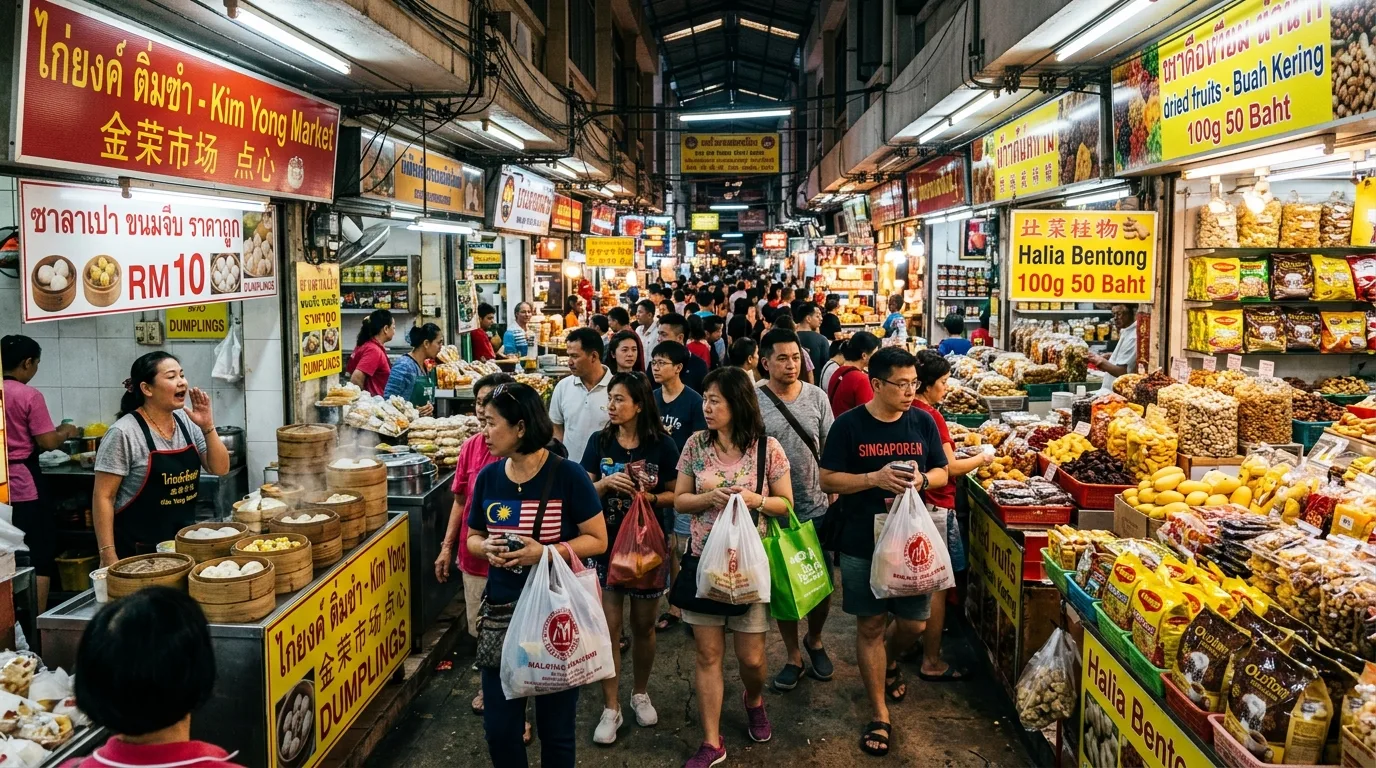
The other defining influence is Hat Yai's proximity to the Malaysian border, just 50 kilometres to the south. Every weekend, thousands of Malaysians and Singaporeans cross the border to shop, eat, and enjoy entertainment at prices far below what they pay at home. This constant flow of visitors gives the city a commercial energy and a weekend buzz that belies its modest size. The duty-free shopping complexes, the night markets, and the enormous Lee Garden Plaza cater specifically to this cross-border trade.
For food lovers, Hat Yai is exceptional. Beyond the dim sum, the city is famous for Kai Tod Hat Yai — fried chicken with crispy shallots that has become a national institution, with branches of Hat Yai-origin chains found across Bangkok. Southern Thai cuisine here is fierce and flavourful — gaeng tai pla (fermented fish organ curry), khanom chin with spicy fish curry sauce, and Muslim-influenced biryani and roti from the deep south. The night markets, particularly Greenway and the municipal market near the station, are outstanding for grazing and experimenting.
Beyond the food and shopping, Hat Yai offers several attractions. The municipal park on the hillside has a cable car, a large standing Buddha, and panoramic city views. Songkhla, the sleepy provincial capital 30 minutes east, has a beautiful old town with street art, the Songkhla National Museum, and stunning views over Songkhla Lake — Thailand's largest natural lake. Ton Nga Chang waterfall in the Banthat Mountains is one of the most spectacular waterfalls in southern Thailand.
Hat Yai is not traditionally a tourist city, and its appeal is not obvious from photographs. The streets are commercial and urban, the architecture is functional, and there are no ancient temples or pristine beaches within the city limits. But for anyone interested in Thai food culture, Chinese-Thai heritage, cross-border dynamics, or simply a genuine Thai city experience far from the tourist trail, Hat Yai is deeply rewarding. Prices are very reasonable, the people are friendly, and the food alone justifies the visit.
A note on safety: Hat Yai is in the far south of Thailand, near the three provinces that experience occasional security incidents related to the long-running southern conflict. Hat Yai itself is generally safe and has not had a significant incident in many years, but it is worth checking current travel advisories before visiting.
Historical Note
Hat Yai was a small village until the southern railway line reached it in the 1920s, transforming it almost overnight into a commercial junction. Chinese immigrants, particularly Hokkien and Teochew, built the city's trading infrastructure and established the food culture that defines it today. The city's growth was further fuelled by cross-border trade with Malaysia, and it remains the economic capital of southern Thailand despite periodic security concerns from the nearby deep south provinces.
Best time to visit: February to May (drier months)
At a Glance
Thai Name
หาดใหญ่
Province
Songkhla
Region
Southern
Population
159,130
Area
21 km²
Elevation
12 m
Postal Code
90110
Airport
HDY
Local Language
Thai (Southern dialect; Hokkien Chinese widely spoken among Thai-Chinese community; Malay near the border)
Cost of Living
budget
/month13,000 THB
~$370 USD
comfortable
/month23,000 THB
~$660 USD
luxury
/month43,000 THB
~$1,230 USD
food
| Item | Low (THB) | High (THB) |
|---|---|---|
| Street food meal (rice / noodle dish) | 40 | 70 |
| Dim sum breakfast (per person) | 60 | 150 |
| Kai Tod Hat Yai (fried chicken set) | 50 | 80 |
| Local restaurant meal | 60 | 120 |
| Seafood restaurant (per person) | 150 | 400 |
| Coffee at a cafe | 40 | 80 |
| Beer in a bar | 60 | 100 |
| Roti with banana and condensed milk | 25 | 50 |
accommodation
| Item | Low (THB) | High (THB) |
|---|---|---|
| Budget hotel | 350 | 600 |
| Mid-range hotel | 700 | 1,500 |
| Business hotel / Lee Garden | 1,500 | 3,500 |
| Luxury hotel | 2,500 | 5,000 |
| Monthly apartment rental | 4,000 | 7,000 |
transport
| Item | Low (THB) | High (THB) |
|---|---|---|
| Songthaew within city | 10 | 20 |
| Grab ride across city | 40 | 100 |
| Tuk-tuk short hop | 30 | 60 |
| Motorbike rental (per day) | 150 | 250 |
| Train to Bangkok (sleeper) | 500 | 1,500 |
| Minivan to Songkhla | 30 | 50 |
utilities
| Item | Low (THB) | High (THB) |
|---|---|---|
| Mobile data SIM (30 days, 30GB) | 200 | 400 |
| Laundry (per kg) | 30 | 50 |
entertainment
| Item | Low (THB) | High (THB) |
|---|---|---|
| Movie ticket | 140 | 250 |
| Cable car at Municipal Park | 30 | 50 |
| Massage (Thai traditional, 1hr) | 200 | 350 |
Internet & Connectivity
Speed Test Averages
vs Bangkok Average (200 Mbps)
45% of Bangkok speed
Providers
Coworking Spaces
1
Weather & Climate
February to May for the driest weather. The monsoon season (October-December) brings heavy rain and occasional flooding. Hat Yai is busiest on weekends when Malaysian and Singaporean shoppers arrive.
| Month | High °C | Low °C | Rain (mm) | Humidity |
|---|---|---|---|---|
| Jan | 30 | 22 | 65 | 80% |
| Feb | 31 | 22 | 25 | 76% |
| Mar | 32 | 23 | 50 | 76% |
| Apr | 33 | 24 | 90 | 78% |
| May | 33 | 24 | 140 | 80% |
| Jun | 33 | 24 | 130 | 79% |
| Jul | 33 | 24 | 125 | 79% |
| Aug | 33 | 24 | 135 | 79% |
| Sep | 32 | 23 | 160 | 81% |
| Oct | 31 | 23 | 270 | 84% |
| Nov | 30 | 23 | 330 | 85% |
| Dec | 30 | 22 | 155 | 82% |
Things to Do
Kim Yong Market
ตลาดกิมหยง
Massive covered market with everything from clothes and electronics to food, household goods, and souvenirs. The heart of Hat Yai's commercial energy.
Hat Yai Municipal Park
สวนสาธารณะเทศบาลนครหาดใหญ่
Hilltop park with a large standing Buddha, cable car ride, pagoda, and panoramic views over the city. A peaceful escape from the commercial streets below.
Songkhla Old Town
เมืองเก่าสงขลา
Beautiful old trading town 30 minutes from Hat Yai with colourful street art, Sino-Portuguese shophouses, museums, and views over Songkhla Lake.
Greenway Night Market
ตลาดกรีนเวย์
One of southern Thailand's best night markets with hundreds of food stalls, fresh seafood, dim sum, desserts, clothing, and a lively atmosphere.
Ton Nga Chang Waterfall
น้ำตกโตนงาช้าง
Spectacular seven-tier waterfall in the Banthat Mountains that resembles elephant tusks. One of the most impressive waterfalls in southern Thailand.
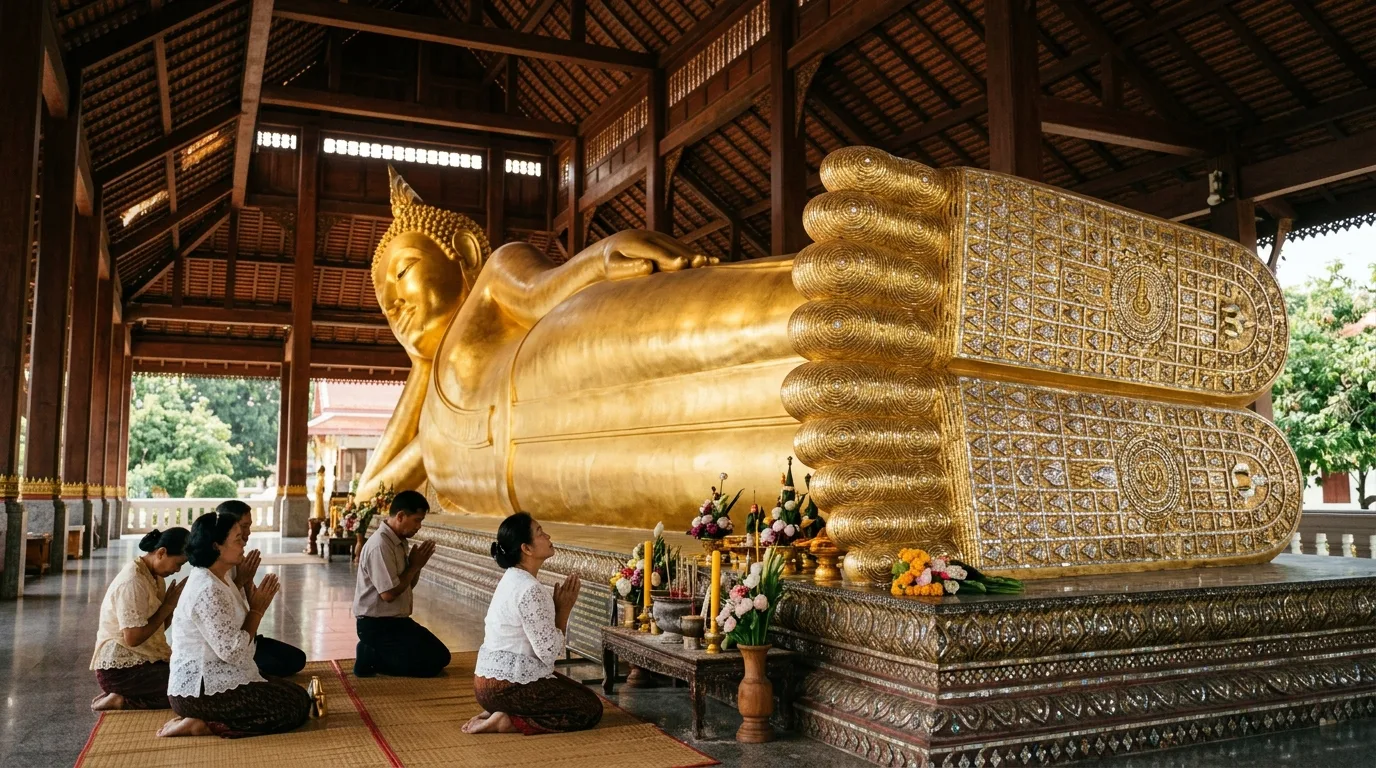
Wat Hat Yai Nai (Reclining Buddha)
วัดหาดใหญ่ใน
Temple housing the third-largest reclining Buddha in the world at 35 metres long. An impressive sight in a cave-like interior.
Samila Beach (Songkhla)
หาดสมิหลา
Wide sandy beach in Songkhla with the famous golden mermaid statue, seafood restaurants, and views across the Gulf of Thailand.
Khao Tangkuan Viewpoint
เขาตังกวน
Hilltop viewpoint in Songkhla with a lighthouse, old fort ruins, and panoramic views over the city, lake, and coastline.
Dim Sum Breakfast Tour
Self-guided tour of Hat Yai's legendary dim sum restaurants — the city has dozens of excellent places serving steamed, fried, and baked Chinese pastries and dumplings.
Central Festival Hat Yai
Modern mega-mall with international brands, cinema, food court, and air-conditioned comfort. Popular with both locals and Malaysian visitors.
Food & Dining
ติ่มซำ
Dim Sum (Hat Yai Style)
Hat Yai's Chinese-Thai community produces some of the finest dim sum in Southeast Asia — steamed har gow, siu mai, bao, and fried dumplings served from early morning.
60-150 per person
Yoo Noi Dim Sum, Ming Mueang, or any of the dim sum houses near the train station
ไก่ทอดหาดใหญ่
Kai Tod Hat Yai
The iconic Hat Yai fried chicken — crispy, golden, served with a mountain of fried shallots and sticky rice. This dish has become famous across all of Thailand.
50-80
The original shops near the train station area, or Fried Chicken Chomchan
ขนมจีนน้ำยาใต้
Khanom Chin Nam Ya Tai
Rice noodles with fiery southern Thai fish curry — a breakfast staple in the south. The curry is rich, creamy, and intensely spiced.
30-50
Morning market stalls and street vendors throughout the city
โรตีมะตะบะ
Roti Mataba
Stuffed roti flatbread with minced chicken or beef, onion, and egg — reflecting the Muslim influence in southern Thailand's food culture.
30-60
Muslim restaurants and night market stalls, especially near the central mosque area
แกงไตปลา
Gaeng Tai Pla
Fermented fish organ curry with bamboo shoots and vegetables — the iconic southern Thai curry that is intensely salty, spicy, and funky. Not for the faint-hearted.
50-80
Local rice-curry shops (khao gaeng). Ask for 'mai phet' (not spicy) if you want a milder version — though it will still be fiery.
ข้าวหมกไก่
Khao Mok Gai
Thai-Muslim chicken biryani with turmeric-fragrant rice, crispy shallots, and a tangy dipping sauce. The southern version is spicier than central Thai versions.
40-70
Muslim restaurants in the city centre, especially around the mosque area and night markets
Night Markets
- Greenway Night Market
- Hat Yai Municipal Night Market (near train station)
- Asian Trade Night Market
Food Streets
- Niphat Uthit 1-3 Roads (downtown food zone)
- Train station area (dim sum + fried chicken corridor)
Accommodation
Hostel Dorm
200 - 400
THB / night
Budget Hotel
400 - 700
THB / night
Mid-Range
800 - 1,800
THB / night
Luxury
2,000 - 5,000
THB / night
Studio /mo
4,000 - 6,500
THB / night
1BR /mo
5,500 - 9,000
THB / night
Best Areas for Tourists
Best Areas for Long Stay
Booking Tip
Hotels fill up on weekends with Malaysian visitors. Book ahead for Friday-Saturday nights. Weekday rates are significantly cheaper. Hotels near the train station offer the most convenient access to dim sum restaurants and night markets.
Getting There from Bangkok
Hat Yai International Airport
Airport Code: HDY
Flight
1h 30min
1,200-3,000 THB
Train
14-16h
300-1,500 THB
Bus
12-13h
500-900 THB
Getting Around
Songthaew
WidespreadColoured songthaew trucks follow fixed routes through the city. The main routes connect the train station, markets, and bus terminal.
10-20
Grab
WidespreadGrab car and motorbike services are well-established in Hat Yai and are the easiest option for visitors.
40-100
Tuk-tuk
WidespreadThree-wheeled tuk-tuks are common for short hops around the city centre and to nearby attractions.
30-80
Motorcycle taxi
WidespreadQuick and cheap for short distances. Riders wear orange vests and wait at major intersections.
20-50
Minivan to Songkhla
WidespreadFrequent minivans connect Hat Yai to Songkhla town centre in about 30 minutes.
30-50
Neighborhoods
City Centre / Train Station Area
Busy, commercial, and energetic — especially on weekends when Malaysian shoppers arriveThe commercial heart of Hat Yai around the railway station with dim sum restaurants, gold shops, Kim Yong Market, and the main hotel strip.
Best for: Food, shopping, convenience, nightlife
Lee Garden / Niphat Uthit Area
More polished and modern than the market area, with a mix of Thai and international restaurantsUpscale commercial district with the Lee Garden Plaza hotel and mall complex, restaurants, and entertainment venues.
Best for: Business travelers, upscale dining, entertainment
University Area (PSU)
Youthful and affordable with a campus-town feelArea around Prince of Songkla University with student-oriented restaurants, affordable apartments, and a younger demographic.
Best for: Long-stay budget accommodation, student energy, affordable food
Songkhla (30 min away)
Sleepy, artistic, and photogenic — the cultural counterpoint to Hat Yai's commercial bustleThe provincial capital with a charming old town, lakeside promenade, Samila Beach, and a quieter, more cultural atmosphere.
Best for: Culture, photography, beach time, escape from Hat Yai's commercial energy
Festivals & Events
Hat Yai Midnight Songkran
สงกรานต์หาดใหญ่
Hat Yai's unique Midnight Songkran begins at midnight on April 13 with massive water fights, foam parties, and concerts. One of the wildest Songkran celebrations in the south.
Chinese New Year
ตรุษจีน
The city's large Chinese-Thai community celebrates with dragon dances, lion processions, temple ceremonies, and spectacular food offerings. The celebrations rival those in Bangkok's Chinatown.
Loy Krathong
ลอยกระทง
Floating offerings at Khlong U Taphao canal and at Songkhla Lake nearby. Combined with light shows, food fairs, and cultural performances.
Songkhla Lagoon Festival
Cultural festival celebrating the Songkhla Lake region with boat races, seafood fairs, cultural shows, and traditional sports at the lakeside.
Practical Info
Hospital
Songklanagarind Hospital (Prince of Songkla University Hospital)
Best SIM Provider
AIS or TRUE — both excellent coverage in the city and throughout Songkhla province. AIS edge in rural areas.
ATM Availability
Everywhere
Language Tip
Basic English at hotels and tourist shops. Many shopkeepers speak Malay due to cross-border trade. Chinese (Hokkien) is widely spoken in the dim sum restaurants and Chinese-Thai businesses. Thai language goes a long way.
Drinking Water
Do not drink tap water. Bottled water is 7-10 THB at any 7-Eleven.
Tipping Culture
Not expected at local restaurants. Rounding up the bill at nicer restaurants is appreciated. Malaysian visitors sometimes tip more generously.
7-Eleven Density
Everywhere
Emergency Numbers
Tourist police: 1155, Ambulance: 1669, Police: 191, Songklanagarind Hospital: 074-451-000
Day Trips
Songkhla Old Town & Samila Beach
Charming old trading town with street art, Sino-Portuguese shophouses, the National Museum, shadow puppet museum, and Samila Beach with its golden mermaid statue.
Ton Nga Chang Waterfall
Spectacular seven-tier waterfall in the Banthat Mountains resembling elephant tusks. Excellent swimming pools at the lower tiers and challenging hiking to the upper falls.
Padang Besar (Malaysia Border)
Cross the border into Malaysia at the Padang Besar crossing for a taste of Malaysian food, shopping, and the experience of walking between two countries.
Khao Nam Khang National Park
Former communist insurgent stronghold turned national park with tunnels, bunkers, waterfalls, and lush mountain forest. A fascinating historical and nature destination.
Nearby Cities
Frequently Asked Questions
Is Hat Yai safe to visit?
Hat Yai itself is generally safe with normal urban precautions. It is near the deep south provinces that have a long-running security situation, but Hat Yai has not had a significant incident in many years. Check current travel advisories. Standard precautions apply — watch your belongings in crowded markets.
Why do Malaysians love Hat Yai?
Hat Yai is just 50km from the Malaysian border. Malaysians come for significantly cheaper food, shopping, massages, and entertainment. The exchange rate favours Malaysian ringgit, and Hat Yai's dim sum, fried chicken, and night markets are famous across Malaysia.
What is Hat Yai famous for food-wise?
Three things above all: dim sum (the best in Thailand, served from dawn), Kai Tod Hat Yai (fried chicken with crispy shallots — now famous nationwide), and southern Thai cuisine including fierce curries and Muslim-influenced dishes like khao mok gai.
How do I get from Hat Yai to the islands?
Koh Lipe: minivan to Pak Bara pier (2 hours) then speedboat (1.5 hours). Koh Samui/Phangan: fly from Hat Yai to Samui, or take bus/train north to Surat Thani then ferry. Langkawi (Malaysia): minivan to Satun then ferry.
Is Hat Yai worth visiting for tourists?
If you love food and authentic city culture, absolutely. Hat Yai is not photogenic or famous among Western tourists, but the dim sum alone justifies a visit. Combined with Songkhla Old Town and the night markets, it makes a fascinating 2-3 day stop.
What is the best dim sum restaurant in Hat Yai?
Yoo Noi and Ming Mueang near the train station are legendary. But the beauty of Hat Yai dim sum is that there are dozens of excellent places — walk into any busy dim sum shop before 08:00 and you will eat well. Follow the crowds.
Can I cross to Malaysia from Hat Yai?
Yes, easily. Padang Besar border crossing is about an hour by train or minivan. You can also take a minivan to Sadao border crossing (45 min). Bring your passport. Visa-free entry to Malaysia is available for most nationalities.
When does it rain the most in Hat Yai?
October to December is the heavy monsoon season with frequent downpours and occasional flooding. November is typically the wettest month. February to May is the driest period. Rain can come any time of year but dry season showers are brief.