
Sukhothai
สุโขทัย · Sukhothai Province
Population
37K
Budget / Month
$259
Internet
50 Mbps
Best Season
November to February (cool & dry)
About Sukhothai
Sukhothai occupies a special place in Thai national identity as the first capital of the Siamese kingdom, founded in 1238 when two Thai chieftains overthrew Khmer rule and established an independent Thai state. The name Sukhothai means "dawn of happiness," and the kingdom's golden age under King Ramkhamhaeng the Great in the late 13th century is remembered as a period of prosperity, cultural flowering, and the creation of the Thai alphabet. The kingdom lasted until 1438 when it was absorbed into the expanding Ayutthaya kingdom, but its legacy as the birthplace of Thai civilization, Thai script, and Theravada Buddhism's establishment as the state religion gives Sukhothai a significance that far exceeds its modest size.
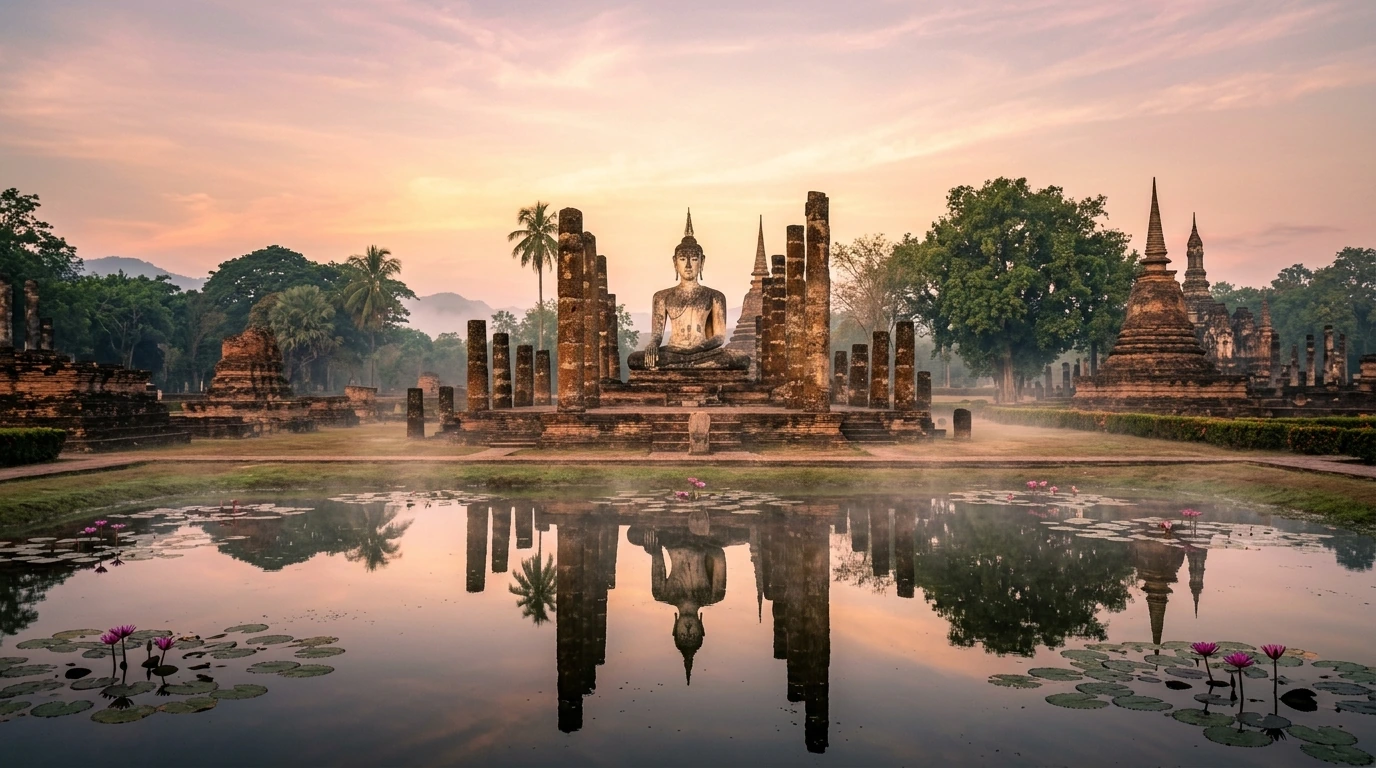
The Sukhothai Historical Park, designated a UNESCO World Heritage Site in 1991, encompasses the ruins of the ancient royal city spread across roughly 70 square kilometers. The central zone contains the most important remains, including the majestic Wat Mahathat with its iconic seated Buddha flanked by lotus-bud stupas, and the enormous Wat Si Chum where a 15-meter Buddha peers through narrow slit walls with an expression of profound serenity. Unlike the more dramatic destruction visible at Ayutthaya, Sukhothai's ruins feel peaceful and contemplative, surrounded by reflective lotus ponds, mature trees, and carefully maintained lawns. The park is divided into five zones, with the central, northern, and western zones containing the most impressive sites.
The modern town of New Sukhothai sits 12 kilometers east of the historical park, a typical small Thai provincial town with a bus station, markets, guesthouses, and everyday Thai life. Most visitors base themselves either in New Sukhothai or at the cluster of guesthouses and small hotels near the historical park entrance. The area between the two is flat agricultural land connected by a straight road with frequent songthaew service. Life moves slowly here, and the lack of major tourist infrastructure means visitors experience an authenticity that more developed destinations have lost. The local food scene is notable for Sukhothai-style noodles, which are distinct from other regional variations.
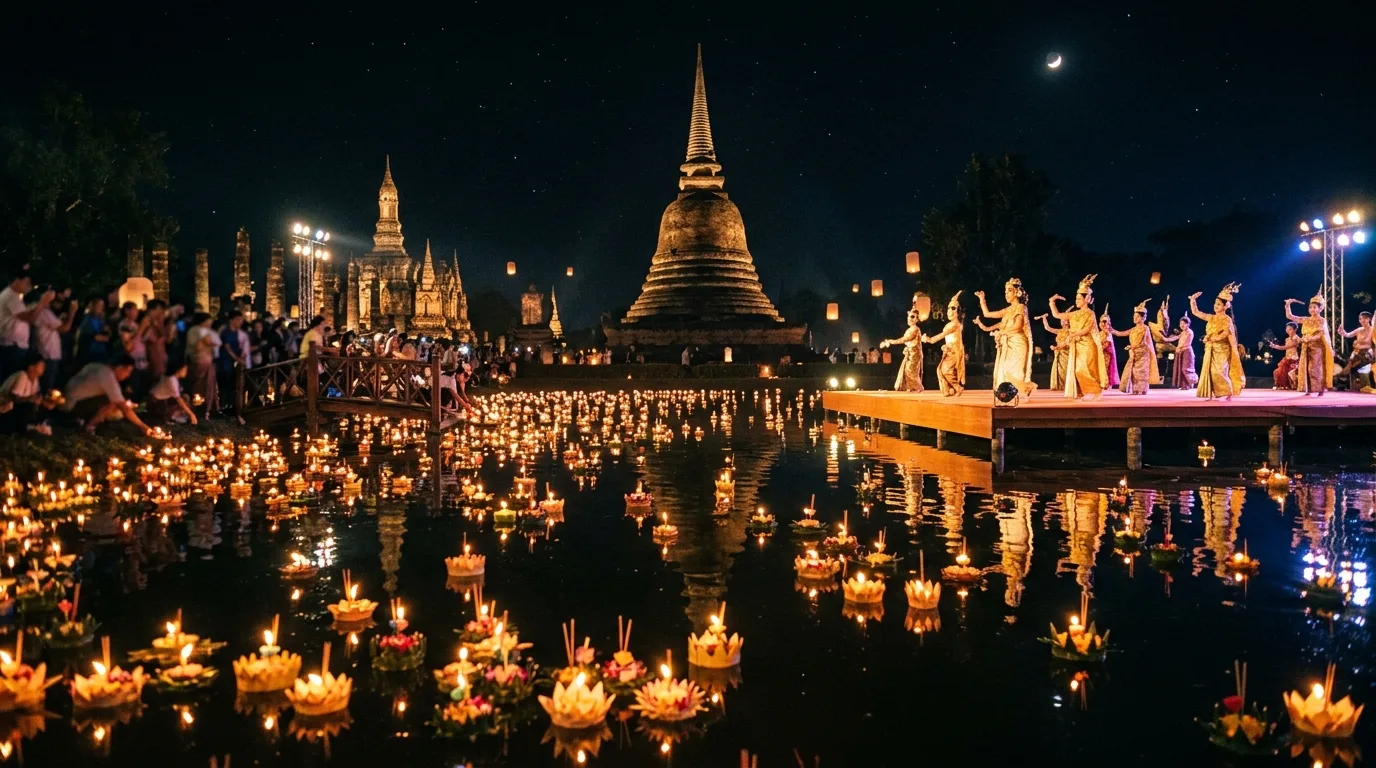
Sukhothai is best visited by travelers who appreciate historical depth, photographic beauty, and tranquility over nightlife and beach activities. The combination of cycling through ancient ruins at dawn, exploring lotus-filled moats, and visiting rarely crowded secondary sites like Si Satchanalai makes for one of Thailand's most rewarding cultural experiences. The annual Loy Krathong festival, which originated in Sukhothai, is celebrated here with a spectacular light-and-sound show at the historical park that draws visitors from across the country. Most travelers spend two to three days, though the area rewards unhurried exploration.
Historical Note
Sukhothai was founded in 1238 as the first independent Thai kingdom after local chieftains overthrew Khmer rule. Under King Ramkhamhaeng the Great, who invented the Thai alphabet in 1283, the kingdom became a center of Theravada Buddhism and Thai art. Sukhothai was absorbed by the Ayutthaya Kingdom in 1438, and its ruins were designated a UNESCO World Heritage Site in 1991.
Best time to visit: November to February (cool & dry)
At a Glance
Thai Name
สุโขทัย
Province
Sukhothai
Region
Northern
Population
37,000
Area
6,596 km²
Elevation
75 m
Postal Code
64000
Airport
THS
Founded
1238
Local Language
Thai (Northern/Central mix)
Cost of Living
budget
/month9,200 THB
~$259 USD
comfortable
/month19,200 THB
~$541 USD
luxury
/month37,800 THB
~$1,065 USD
accommodation
| Item | Low (THB) | High (THB) |
|---|---|---|
| Hostel dorm bed | 150 | 300 |
| Budget guesthouse | 250 | 500 |
| Mid-range hotel | 500 | 1,200 |
| Best hotel in town | 1,200 | 3,000 |
| Monthly room rental | 3,000 | 6,000 |
food
| Item | Low (THB) | High (THB) |
|---|---|---|
| Street food meal | 30 | 50 |
| Local restaurant meal | 40 | 80 |
| Sukhothai noodles | 30 | 50 |
| Beer (local brand) | 45 | 80 |
| Coffee at cafe | 30 | 70 |
| Fresh fruit shake | 25 | 40 |
transport
| Item | Low (THB) | High (THB) |
|---|---|---|
| Bicycle rental (full day) | 30 | 50 |
| Motorbike rental (per day) | 150 | 250 |
| Songthaew to Historical Park | 30 | 50 |
| Tuk-tuk (in town) | 40 | 100 |
| Bus to Phitsanulok | 40 | 60 |
utilities
| Item | Low (THB) | High (THB) |
|---|---|---|
| Electricity (monthly) | 500 | 1,200 |
| Mobile data (tourist SIM, 30 days) | 300 | 600 |
| Laundry (per kg) | 25 | 40 |
entertainment
| Item | Low (THB) | High (THB) |
|---|---|---|
| Historical park entry (central zone) | 100 | 100 |
| Historical park combo ticket (all zones) | 350 | 350 |
| Thai massage (1 hour) | 150 | 250 |
| Si Satchanalai entry | 100 | 100 |
Internet & Connectivity
Speed Test Averages
vs Bangkok Average (200 Mbps)
25% of Bangkok speed
Providers
Coworking Spaces
0
Weather & Climate
November to February is the cool season with comfortable cycling weather and the best light for photography. The Loy Krathong festival in November is the most spectacular time to visit. March to May is very hot. June to October sees rain that keeps the moats full and the vegetation lush.
Burning Season Warning
February to April brings agricultural burning haze to the lower northern plains including Sukhothai. Air quality may be poor on some days, though typically less severe than Chiang Mai or Chiang Rai.
| Month | High °C | Low °C | Rain (mm) | Humidity |
|---|---|---|---|---|
| Jan | 31 | 16 | 5 | 60% |
| Feb | 34 | 18 | 8 | 55% |
| Mar | 37 | 22 | 20 | 52% |
| Apr | 38 | 25 | 55 | 58% |
| May | 35 | 25 | 165 | 72% |
| Jun | 34 | 25 | 115 | 74% |
| Jul | 33 | 24 | 135 | 76% |
| Aug | 33 | 24 | 180 | 78% |
| Sep | 32 | 24 | 230 | 80% |
| Oct | 32 | 23 | 130 | 75% |
| Nov | 31 | 20 | 30 | 65% |
| Dec | 30 | 17 | 5 | 61% |
Things to Do
Wat Mahathat
วัดมหาธาตุ
The spiritual center of ancient Sukhothai with an iconic seated Buddha surrounded by lotus-bud stupas, columns, and smaller chedis. The most important and photogenic temple in the park.
Wat Si Chum
วัดศรีชุม
A massive 15-meter seated Buddha peers serenely through narrow slit walls of a roofless mandapa. One of the most powerful and photogenic images in all of Thai archaeology.
Sukhothai Historical Park (cycling)
อุทยานประวัติศาสตร์สุโขทัย
193 ruins spread across 70 square kilometers divided into five zones. The flat terrain and quiet roads make cycling the perfect way to explore at your own pace.
Wat Saphan Hin
วัดสะพานหิน
Hilltop temple in the western zone reached by climbing an ancient stone-slab path. A 12-meter standing Buddha surveys the entire Sukhothai plain from the summit.
Ramkhamhaeng National Museum
พิพิธภัณฑสถานแห่งชาติ รามคำแหง
Excellent museum housing artifacts from the Sukhothai period including ceramics, bronze Buddhas, the famous Ramkhamhaeng inscription stone (replica), and Sangkhalok pottery.
Si Satchanalai Historical Park
อุทยานประวัติศาสตร์ศรีสัชนาลัย
Sister city ruins 60 km north of Sukhothai, set among forests along the Yom River. Less visited, more atmospheric, and arguably more beautiful than Sukhothai itself.
Wat Chang Lom (Sukhothai)
วัดช้างล้อม
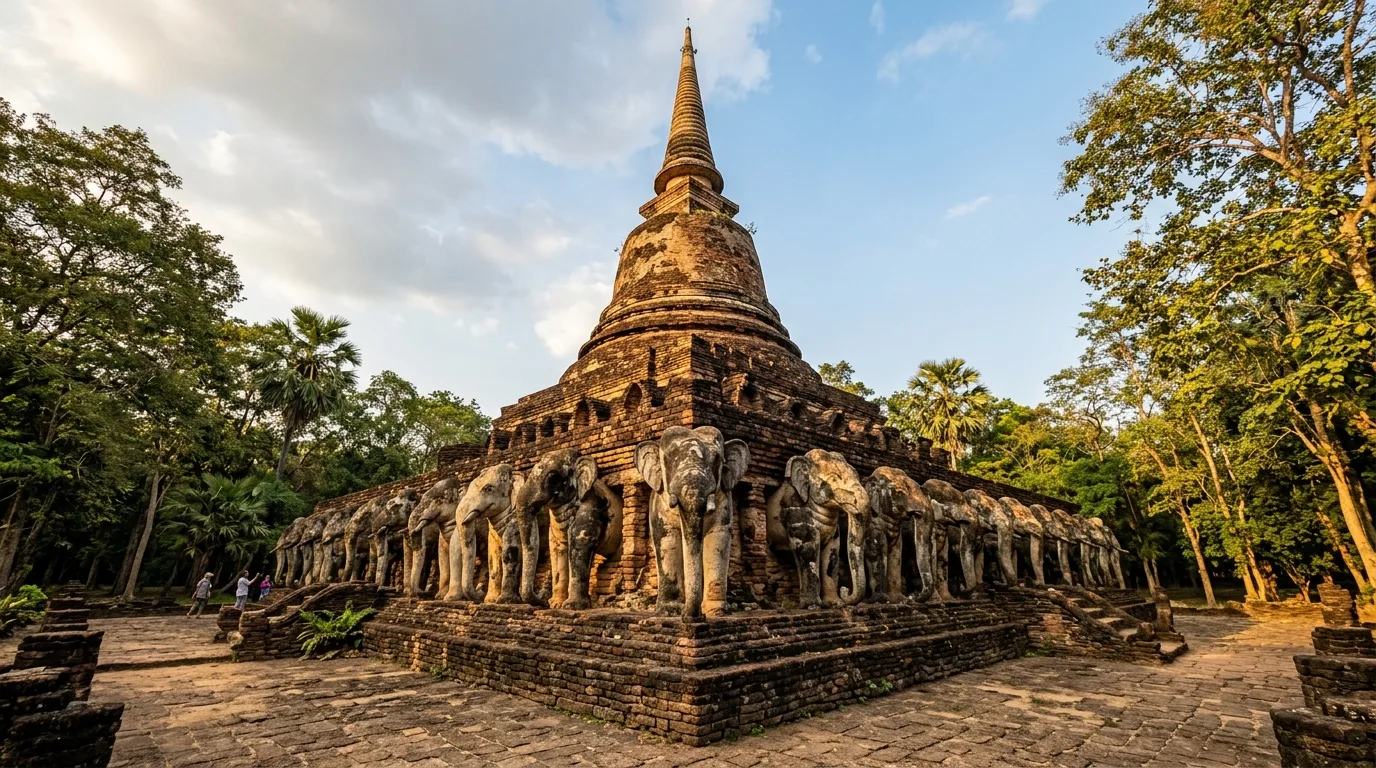
A bell-shaped chedi surrounded by 36 elephant sculptures at its base, located in the eastern zone of the historical park. A unique and charming architectural style.
Sangkhalok Museum
พิพิธภัณฑ์สังคโลก
Private museum showcasing the famous Sangkhalok ceramics produced in the Sukhothai and Si Satchanalai kilns during the 13th-16th centuries, which were exported across Asia.
Organic Agriculture Project (Royal Project)
Community-based organic farms near the historical park where visitors can learn about traditional Thai farming, rice cultivation, and local agricultural practices.
Food & Dining
ก๋วยเตี๋ยวสุโขทัย
Sukhothai Noodles
Sukhothai's signature dish: thin rice noodles in a sweet-tangy-spicy broth with sliced pork, green beans, crushed peanuts, and a distinctive flavor unlike noodles anywhere else in Thailand.
30-50
Jayhae Restaurant near the historical park, or the New Sukhothai morning market
ผัดไทยสุโขทัย
Pad Thai Sukhothai
The original style of pad thai with a tangier, sweeter flavor profile than the Bangkok version. Wrapped in a thin egg crepe rather than served open.
35-60
Street stalls near the historical park entrance and the night market
ปลาดุกย่าง
Pla Duk Yang
Grilled catfish served butterflied with a smoky char, accompanied by spicy dipping sauce and fresh herbs. A popular local dinner staple.
50-100
Evening food stalls in New Sukhothai
ขนมจีน
Khanom Jeen
Fresh rice noodles served with a choice of curry toppings including green curry, fish curry, or nam ya, with a plate of raw vegetables.
25-40
Morning market stalls in New Sukhothai
ข้าวเปียกเส้น
Khao Piak Sen
Thick handmade rice noodles in a comforting clear broth with minced pork and crispy garlic. A simple but satisfying northern Thai comfort food.
30-50
Local noodle shops near the bus station in New Sukhothai
กล้วยปิ้ง
Kluay Ping
Grilled bananas pressed flat and caramelized over charcoal. A sweet, smoky snack found at roadside vendors throughout the Sukhothai countryside.
10-20
Roadside vendors along the road between New Sukhothai and the historical park
Night Markets
- New Sukhothai Night Market (Jarot Withithong Road)
- Historical Park night food stalls (near entrance, evenings)
Food Streets
- Jarot Withithong Road (New Sukhothai)
- Nikhorn Kasem Road (New Sukhothai)
Accommodation
Hostel Dorm
150 - 300
THB / night
Budget Hotel
250 - 500
THB / night
Mid-Range
500 - 1,200
THB / night
Luxury
1,200 - 3,000
THB / night
Studio /mo
3,000 - 6,000
THB / night
1BR /mo
4,000 - 9,000
THB / night
Best Areas for Tourists
Best Areas for Long Stay
Booking Tip
During Loy Krathong (November full moon) accommodation fills up weeks in advance. Book at least a month ahead. At other times, walk-in rates are easy to find and rooms are plentiful.
Getting There from Bangkok
Sukhothai Airport
Airport Code: THS
Flight to Sukhothai Airport
1h 20min
2,000-4,500 THB
Bus
6-7h
300-500 THB
Train to Phitsanulok + Bus
7-8h
250-800 THB
Getting Around
Bicycle rental
WidespreadThe essential way to explore the historical park. Available at the park entrance and most guesthouses.
30-50 per day
Songthaew
LimitedShared trucks running between New Sukhothai and the Historical Park every 20-30 minutes.
30-50 per trip
Motorbike rental
LimitedUseful for visiting Si Satchanalai and the outer zones. Available in New Sukhothai.
150-250 per day
Tuk-tuk
LimitedSmall three-wheeled taxis in New Sukhothai town. Not common near the historical park.
40-100 per trip
Neighborhoods
Historical Park Area
Serene and rural with a small tourist clusterThe cluster of guesthouses, restaurants, and bicycle rental shops near the UNESCO park entrance. Peaceful and convenient for early morning temple visits.
Best for: Temple visits, cycling, quiet stays
New Sukhothai
Small Thai town, friendly and unhurriedThe modern provincial town 12 km east of the ruins with the bus station, main market, banks, and most practical services. More restaurants and nightlife options.
Best for: Practical services, local markets, bus connections
Between Old and New Sukhothai
Rural Thai countrysideThe flat road connecting the two areas, lined with rice paddies, occasional guesthouses, and rural scenery. Some mid-range resorts are located along this stretch.
Best for: Mid-range accommodation, peaceful countryside setting
Festivals & Events
Loy Krathong Festival (Sukhothai)
เทศกาลลอยกระทง สุโขทัย
The birthplace of Loy Krathong celebrates with the grandest festival in Thailand: a spectacular light-and-sound show at the historical park, thousands of floating krathong, fireworks, and cultural performances over five days.
Songkran Festival
สงกรานต์
Thai New Year water celebrations centered on New Sukhothai with water play, merit-making at temples, and traditional Songkran parades through town.
Sukhothai Ordination Festival
งานประเพณีแห่เทียนพรรษา
Buddhist Lent festival with elaborately carved candle processions to temples, traditional dancing, and community merit-making ceremonies.
Ramkhamhaeng Day
วันพ่อขุนรามคำแหงมหาราช
National holiday commemorating King Ramkhamhaeng the Great with ceremonies at his monument, cultural exhibitions, and historical re-enactments.
Practical Info
Hospital
Sukhothai Hospital
Best SIM Provider
AIS (best rural coverage in the region)
ATM Availability
Common
Language Tip
Very limited English. Learn basic Thai phrases and numbers. Guesthouse staff near the historical park speak basic English. Download Google Translate offline.
Drinking Water
Drink bottled water only. Available at all convenience stores and guesthouses.
Tipping Culture
Not expected. Small tips appreciated at restaurants but not customary.
7-Eleven Density
Sparse
Emergency Numbers
Tourist Police: 1155, Emergency: 191, Ambulance: 1669
Day Trips
Si Satchanalai Historical Park
Sukhothai's sister city with atmospheric ruins set in forest along the Yom River. Less crowded and arguably more beautiful than Sukhothai itself. Excellent cycling.
Phitsanulok
Lively provincial city home to Wat Phra Si Rattana Mahathat and its revered Phra Phuttha Chinnarat, widely considered Thailand's most beautiful Buddha image.
Sri Nakhon Khuean Khan Park & Thung Salaeng Luang
Dramatic national park with savanna grasslands, pine forests, and waterfall trails. Best visited November-January when the grass turns golden.
Kamphaeng Phet Historical Park
Another UNESCO-listed historical park from the Sukhothai era with forest-covered ruins and far fewer visitors. A peaceful extension of the Sukhothai experience.
Nearby Cities
Frequently Asked Questions
How do I get to the Historical Park from New Sukhothai?
Songthaews (shared trucks) run between New Sukhothai bus station and the historical park every 20-30 minutes, costing 30-50 THB. The ride takes about 20 minutes. Alternatively, rent a motorbike or arrange transport through your guesthouse.
Should I stay near the park or in New Sukhothai?
For the best experience, stay near the historical park. This lets you visit at dawn before tour groups arrive and enjoy the illuminated ruins at night. New Sukhothai has more restaurant options and services but requires a songthaew ride to the ruins.
How long do I need in Sukhothai?
Two full days is ideal: one for the main historical park zones and one for Si Satchanalai. A single full day covers the central, northern, and western zones of the main park. Three days allows a completely relaxed pace.
Is Sukhothai the birthplace of Loy Krathong?
Yes. According to Thai tradition, the Loy Krathong festival originated in Sukhothai during the reign of King Ramkhamhaeng in the 13th century. The annual festival here is the most elaborate in Thailand with a spectacular light-and-sound show.
How much does it cost to enter the Historical Park?
Each zone costs 100 THB for foreigners, plus 10 THB for a bicycle entry. The central zone is essential. A combined ticket for all five zones plus a bicycle costs approximately 350 THB. Thai nationals pay 30 THB per zone.
Is it hot cycling around the ruins?
Yes, especially from March to May when temperatures reach 38 degrees. Start early in the morning, take a midday break, and return in the late afternoon. Bring plenty of water, sunscreen, and a hat. The park has shade in places but many ruins are exposed.
Is there an airport in Sukhothai?
Yes, Sukhothai Airport (THS) is a small private airport operated by Bangkok Airways with flights to and from Bangkok. It is one of the most charming airports in Thailand, styled like an open-air sala. Flights are convenient but significantly more expensive than the bus.
Can I visit Sukhothai as a day trip from Chiang Mai?
It is possible but not recommended. The bus takes about 5-6 hours each way, making it an exhausting day trip. It is better to stay overnight in Sukhothai and continue to Chiang Mai or Bangkok afterward.