
Wiang Kum Kam
เวียงกุมกาม · Chiang Mai Province
Best Season
November to February
Score
5 / 10
Elevation
310 m
Area
5 km²
About Wiang Kum Kam
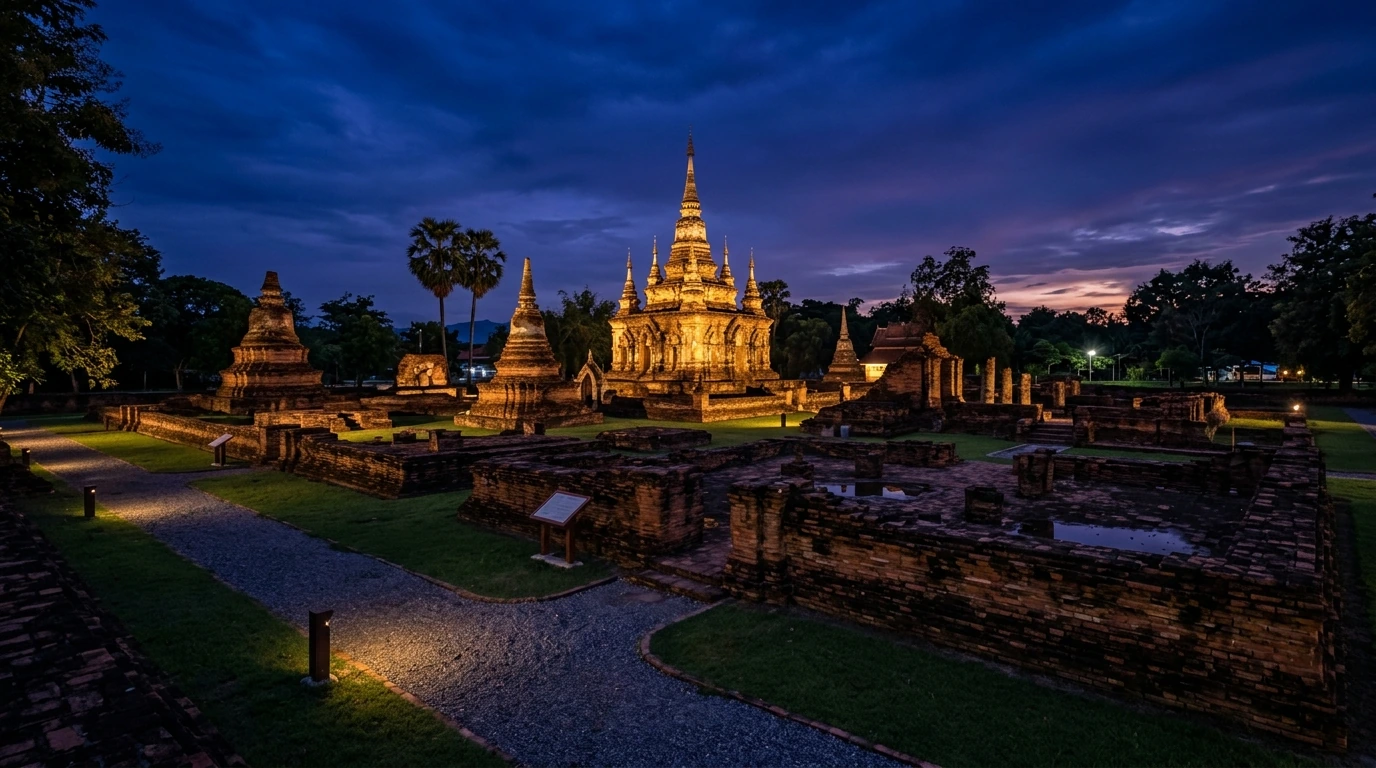
Wiang Kum Kam is the ghost of a city buried beneath the southern suburbs of Chiang Mai. Founded by King Mangrai in 1286 — five years before he established Chiang Mai — it was the capital of the Lanna Kingdom before repeated flooding by the Ping River buried it under meters of silt. The city was lost for centuries until archaeological excavations beginning in 1984 uncovered over 40 temple ruins.
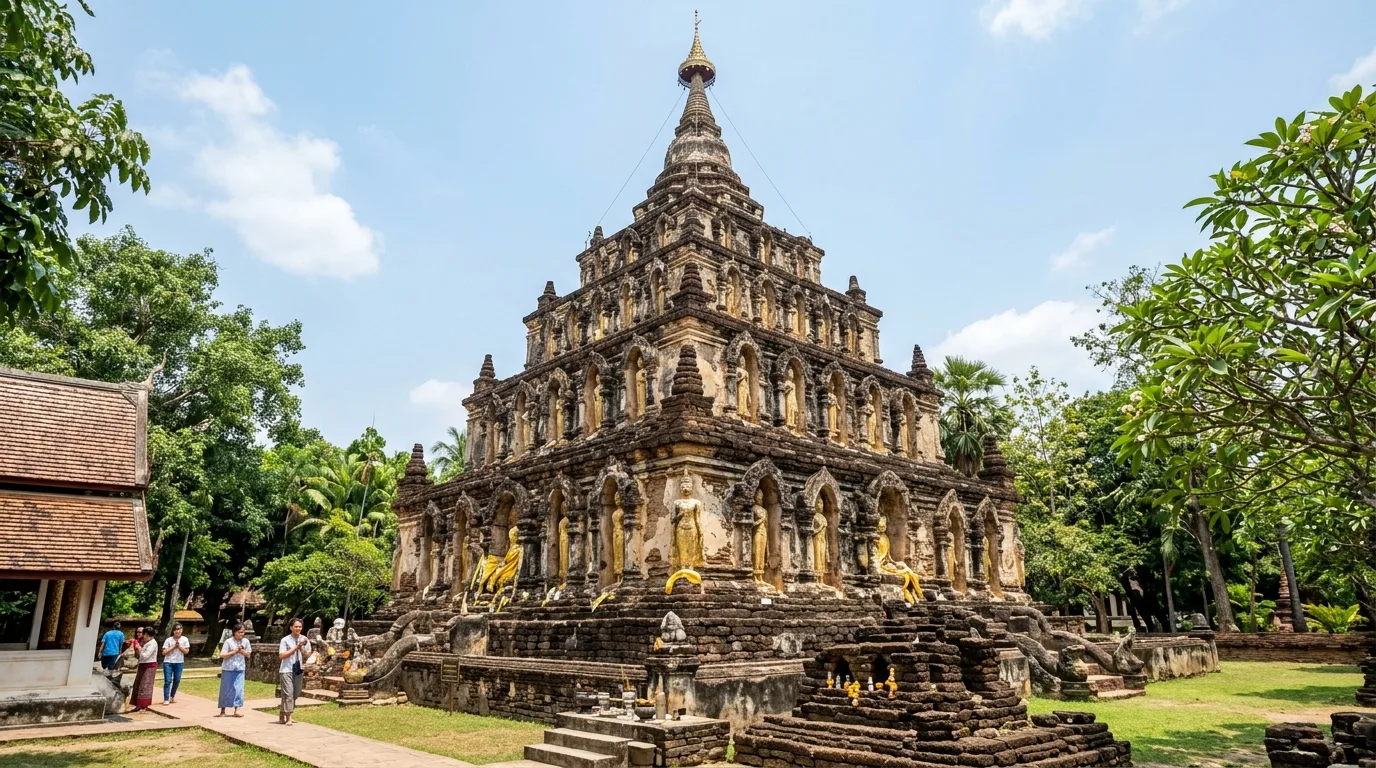
Today, the ruins are scattered across a modern residential village about 5 km south of Chiang Mai's old city. It is a surreal experience: ancient brick chedis and temple foundations sit in people's backyards, beside modern houses, and along village lanes. The most important site, Wat Chedi Liam, has a fully restored square-based chedi in Haripunchai (Mon) style that is still an active temple.
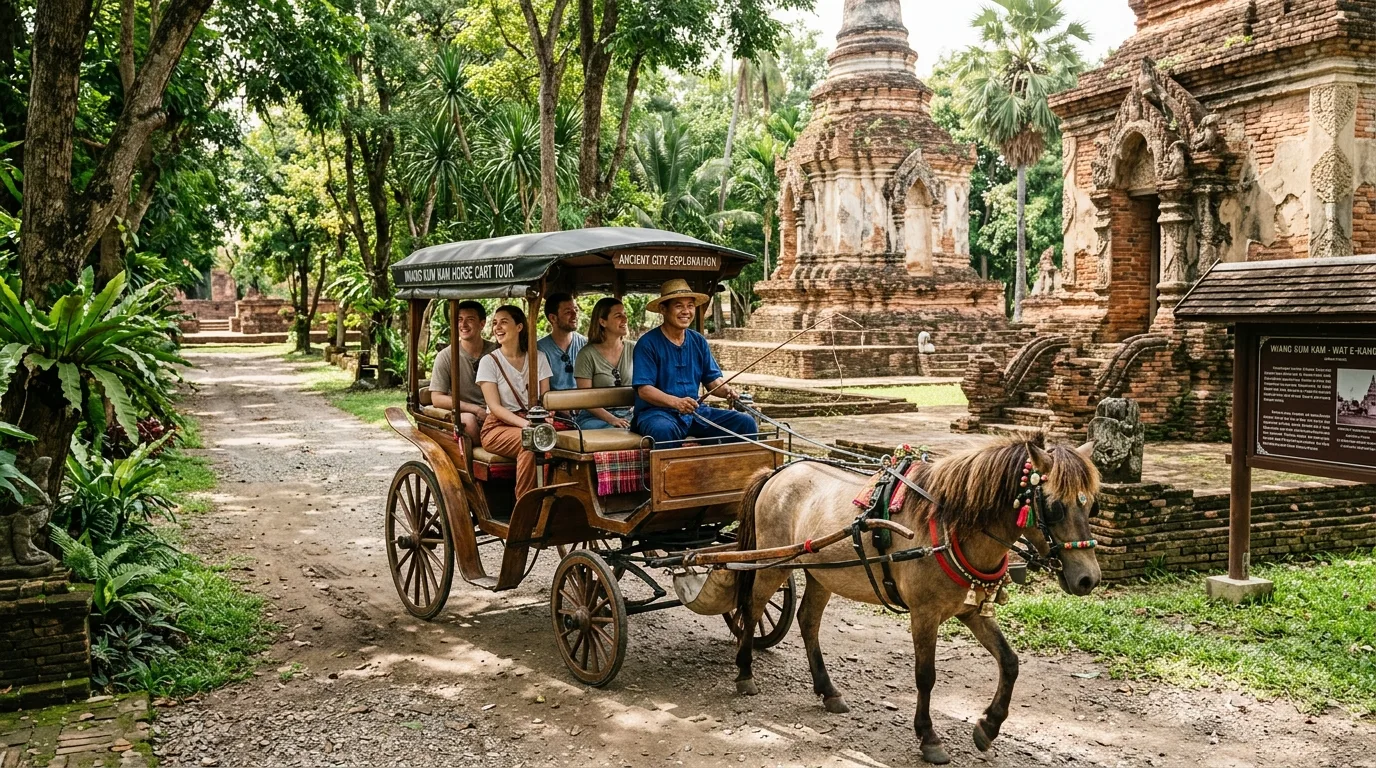
Horse-drawn carriage tours connect the main ruins. The site is free and sees far fewer visitors than the Chiang Mai old city temples, giving it a quiet, almost secret atmosphere.
Historical Note
Founded by King Mangrai in 1286 as the Lanna Kingdom capital. He moved the capital to Chiang Mai in 1291 due to flooding. The Ping River eventually buried the entire city under meters of silt. Rediscovered through archaeological excavations starting in 1984.
Best time to visit: November to February
At a Glance
Thai Name
เวียงกุมกาม
Province
Chiang Mai
Region
Northern
Area
5 km²
Elevation
310 m
Established
1286
Costs
Typical prices you'll encounter when visiting Wiang Kum Kam. Grouped by category.
food
| Item | Low (THB) | High (THB) |
|---|---|---|
| Street food meal | 25 | 50 |
| Local restaurant meal | 40 | 65 |
| Cappuccino | 35 | 65 |
| Large beer | 55 | 85 |
| Water 1.5L | 10 | 14 |
accommodation
| Item | Low (THB) | High (THB) |
|---|---|---|
| Nearby guesthouse per night | 400 | 800 |
| Chiang Mai suburb hotel per night | 800 | 2,000 |
| Monthly apartment | 3,500 | 7,000 |
transport
| Item | Low (THB) | High (THB) |
|---|---|---|
| Grab from Chiang Mai | 60 | 100 |
| Tuk-tuk from Chiang Mai | 100 | 150 |
| Horse-drawn carriage tour | 200 | 300 |
Weather & Climate
November to February for cool season comfort. Early morning or late afternoon for best light and temperatures. Avoid midday heat.
Burning Season Warning
March-April haze from regional burning can affect air quality.
| Month | High °C | Low °C | Rain (mm) | Humidity |
|---|---|---|---|---|
| Jan | 30 | 14 | 5 | 55% |
| Feb | 33 | 16 | 5 | 45% |
| Mar | 36 | 19 | 15 | 45% |
| Apr | 37 | 22 | 50 | 55% |
| May | 34 | 23 | 150 | 68% |
| Jun | 33 | 23 | 130 | 72% |
| Jul | 32 | 23 | 160 | 75% |
| Aug | 32 | 23 | 200 | 78% |
| Sep | 32 | 22 | 220 | 80% |
| Oct | 31 | 21 | 120 | 75% |
| Nov | 30 | 18 | 40 | 65% |
| Dec | 29 | 14 | 10 | 55% |
Things to Do
Explore the scattered ruins
Over 40 temple ruins spread across the village — wander through lanes discovering brick foundations and chedis among modern houses.
Wat Chedi Liam
วัดเจดีย์เหลี่ยม
The centerpiece — a restored Mon-style square chedi surrounded by smaller ruined chedis. Still an active temple.
Horse-drawn carriage tour
Traditional horse carriages tour the main ruins over about 1 hour, with the driver providing commentary.
Wat Kan Thom (Wat Chang Kham)
วัดกานโถม
Important ruin with an inscription stone that helped date the site. Buddha images and brick foundations.
Information Center
Small museum with maps, artifacts, and historical context. Essential for understanding the site.
Cycling tour
Rent a bicycle and follow the signed route connecting major ruins. Flat terrain and minimal traffic.
Food Nearby
ข้าวซอย
Khao Soi
Northern Thai curry noodle soup — Chiang Mai's signature dish, available at nearby restaurants.
40-60
Restaurants along the Chiang Mai-Lamphun road
ไส้อั่ว
Sai Ua
Herb-packed Chiang Mai sausage with lemongrass and kaffir lime.
30-60
Nearby markets
น้ำพริกอ่อง
Nam Prik Ong
Northern Thai tomato-chili dip with minced pork, served with vegetables.
30-50
Local restaurants near the village
Where to Stay
Hostel Dorm
200 - 400
THB / night
Budget Hotel
400 - 800
THB / night
Mid-Range
800 - 2,000
THB / night
Luxury
2,000 - 4,000
THB / night
Best Areas to Base Yourself
Booking Tip
Very limited accommodation at the site. Most visitors stay in Chiang Mai (5 km north) and visit as a half-day trip.
Getting There from Bangkok
Fly to Chiang Mai + local transport
1.5 hours + 15 minutes
1,500-4,000 THB
Train to Chiang Mai + local transport
12-15 hours + 15 minutes
500-1,800 THB
Festivals & Events
Wiang Kum Kam Festival
Cultural events with Lanna performances, candle-lit ruins, and historical reenactments. Not held every year.
Songkran
สงกรานต์
Area participates in Chiang Mai's Songkran celebrations.
Yi Peng / Loy Krathong
ยี่เป็ง / ลอยกระทง
Lantern and floating offerings festivals as part of Chiang Mai celebrations.
Practical Info
Hospital
Chiang Mai hospitals (15 minutes)
Best SIM Provider
AIS
ATM Availability
Common
Language Tip
Thai. Limited English at the information center and carriage tours.
Drinking Water
Do not drink tap water. Bottled water widely available.
Tipping Culture
Not expected
7-Eleven Density
Common
Emergency Numbers
Tourist police 1155, Emergency 191
Nearby Attractions
Frequently Asked Questions
Why have I not heard of Wiang Kum Kam?
It is overshadowed by Chiang Mai's more accessible temples. The ruins are genuine and historically significant but are modest brick foundations rather than dramatic standing structures.
How does it compare to Sukhothai or Ayutthaya?
Much smaller. The interest is in the concept — an entire city buried by floods and rediscovered — and the surreal juxtaposition of ruins within a modern village.
Is the horse-drawn carriage tour worth it?
Yes. The ruins are spread out and poorly signed. The carriage driver knows where everything is and provides basic commentary.
How long was Wiang Kum Kam the capital?
Only about five years (1286-1291). King Mangrai moved the capital to Chiang Mai due to flooding.