
Doi Mae Salong
ดอยแม่สลอง · Chiang Rai Province
Population
3K
Budget / Month
$244
Internet
10 Mbps
Best Season
November to February (cool, clear, cherry blossoms December-January)
About Doi Mae Salong
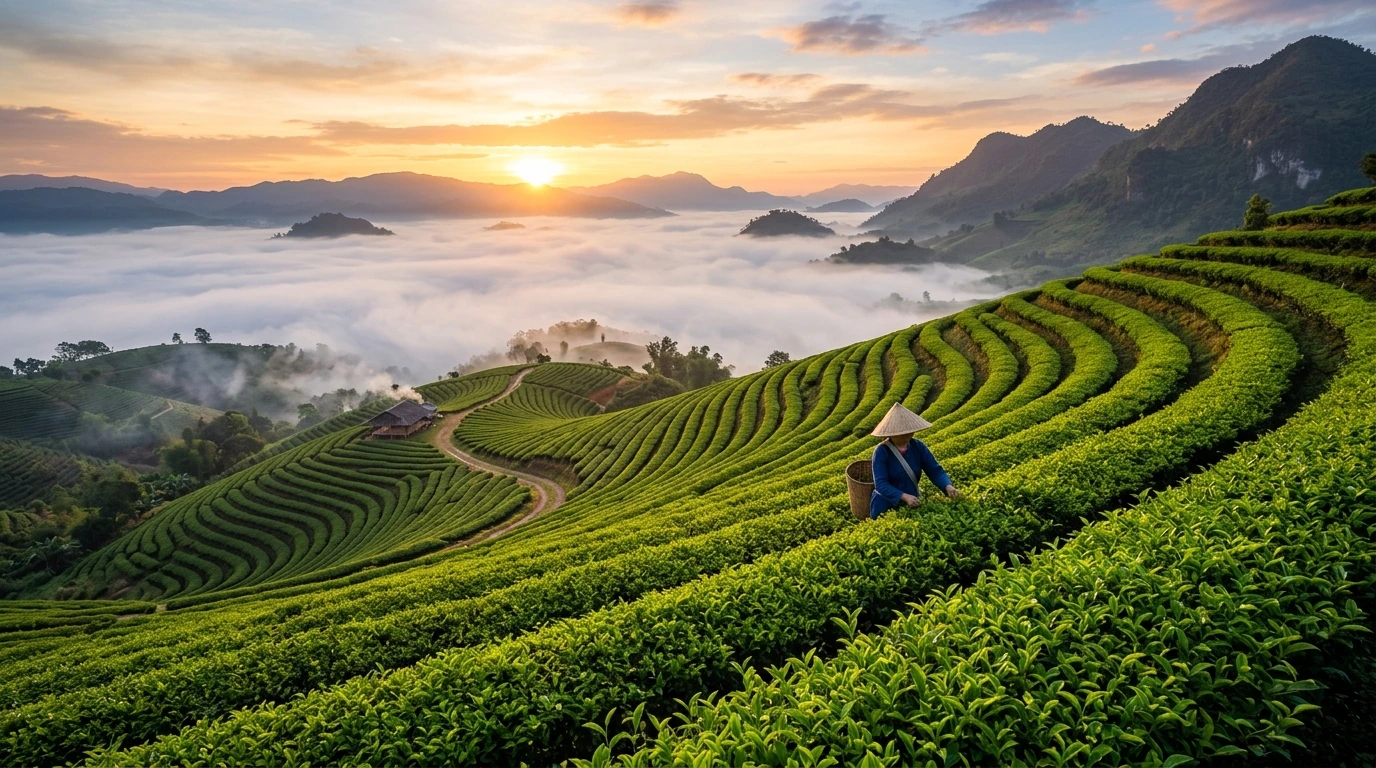
Doi Mae Salong is one of Thailand's most unusual places. Perched at 1,200 meters in the mountains of Chiang Rai province, it is a village where Mandarin Chinese is the primary language, tea plantations carpet the hillsides, and the food is Yunnanese rather than Thai. The village was founded by remnants of the Kuomintang 93rd Division who retreated from Yunnan province after the communist victory in 1949.
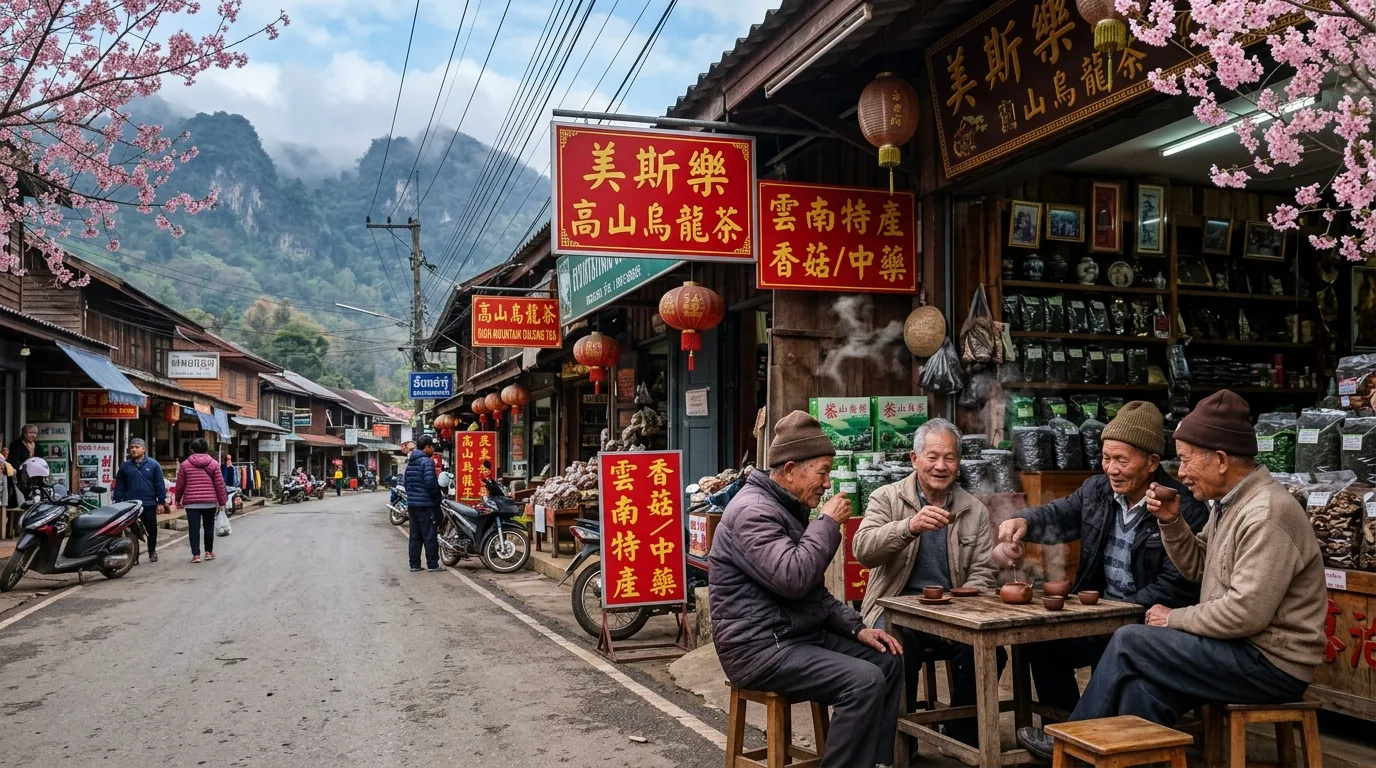
Today, officially renamed Santikhiri (Hill of Peace), the village is a peaceful place with a strong tea culture. The main street is lined with tea shops offering free tastings of oolong, jin xuan, and other varieties. The morning market sells Yunnanese steamed buns, noodles, and Chinese herbs. The surrounding mountains offer hiking to Akha, Lisu, and Yao hill-tribe villages.
In late December to January, cherry trees bloom pink across the mountainside, drawing thousands of Thai visitors. The combination of Chinese culture, excellent tea, mountain scenery, and cool climate makes Doi Mae Salong one of northern Thailand's most distinctive destinations. Nights can drop to 5 degrees Celsius in cool season, so warm layers are essential.
Historical Note
Founded by Chinese Nationalist (KMT) 93rd Division soldiers who retreated from Yunnan in 1949. They initially continued fighting and trading in opium before being granted Thai citizenship and encouraged to grow tea instead. Officially renamed Santikhiri in the 1980s.
Best time to visit: November to February (cool, clear, cherry blossoms December-January)
At a Glance
Thai Name
ดอยแม่สลอง
Province
Chiang Rai
Region
Northern
Population
3,000
Area
150 km²
Elevation
1,200 m
Postal Code
57110
Founded
1949
Local Language
Mandarin Chinese, Thai, Kam Muang
Cost of Living
budget
/month8,800 THB
~$244 USD
comfortable
/month16,700 THB
~$464 USD
luxury
/month28,000 THB
~$778 USD
food
| Item | Low (THB) | High (THB) |
|---|---|---|
| Street food / market meal | 25 | 50 |
| Local restaurant meal | 40 | 70 |
| Coffee/tea (cafe) | 30 | 60 |
| Beer (store) | 55 | 70 |
| Water bottle (1.5L) | 10 | 15 |
accommodation
| Item | Low (THB) | High (THB) |
|---|---|---|
| Basic guesthouse | 300 | 600 |
| Mid-range hotel | 700 | 1,500 |
| Mountain resort | 1,500 | 3,500 |
| Homestay | 300 | 500 |
transport
| Item | Low (THB) | High (THB) |
|---|---|---|
| Motorbike rental (day) | 200 | 300 |
| Songthaew from Chiang Rai | 100 | 150 |
entertainment
| Item | Low (THB) | High (THB) |
|---|---|---|
| Tea tasting | 0 | 0 |
| Oolong tea (100g) | 100 | 500 |
| Fruit wine (bottle) | 100 | 300 |
utilities
| Item | Low (THB) | High (THB) |
|---|---|---|
| SIM card (tourist) | 299 | 399 |
Internet & Connectivity
Speed Test Averages
vs Bangkok Average (200 Mbps)
5% of Bangkok speed
Providers
Coworking Spaces
0
Weather & Climate
Late November to February for cool weather, clear views, and cherry blossoms (peak bloom usually late December to early January). Chinese New Year (January-February) is festive.
Burning Season Warning
March to April moderate haze from regional agricultural burning
| Month | High °C | Low °C | Rain (mm) | Humidity |
|---|---|---|---|---|
| Jan | 22 | 7 | 5 | 55% |
| Feb | 25 | 9 | 5 | 48% |
| Mar | 28 | 13 | 15 | 48% |
| Apr | 30 | 17 | 50 | 55% |
| May | 28 | 18 | 160 | 72% |
| Jun | 26 | 19 | 180 | 78% |
| Jul | 25 | 19 | 240 | 82% |
| Aug | 25 | 19 | 280 | 85% |
| Sep | 26 | 18 | 220 | 82% |
| Oct | 26 | 16 | 100 | 72% |
| Nov | 24 | 11 | 25 | 60% |
| Dec | 22 | 7 | 10 | 55% |
Things to Do
Tea Plantation Tours and Tastings
Dozens of tea shops line the main street offering free tastings of oolong, jin xuan, and local specialties. Walk through plantations on surrounding hillsides.
Morning Market
Early morning market (6-8 AM) selling Yunnanese steamed buns, noodles, Chinese herbs, and hill-tribe produce. Unique and atmospheric.
Cherry Blossom Viewing
Himalayan cherry trees bloom pink across the mountain in late December to early January. The village hosts flower viewing events.
Martyrs Memorial Museum
Small museum documenting the KMT 93rd Division's history, their retreat from China, and settlement in Thailand.
Wat Santikhiri
วัดสันติคีรี
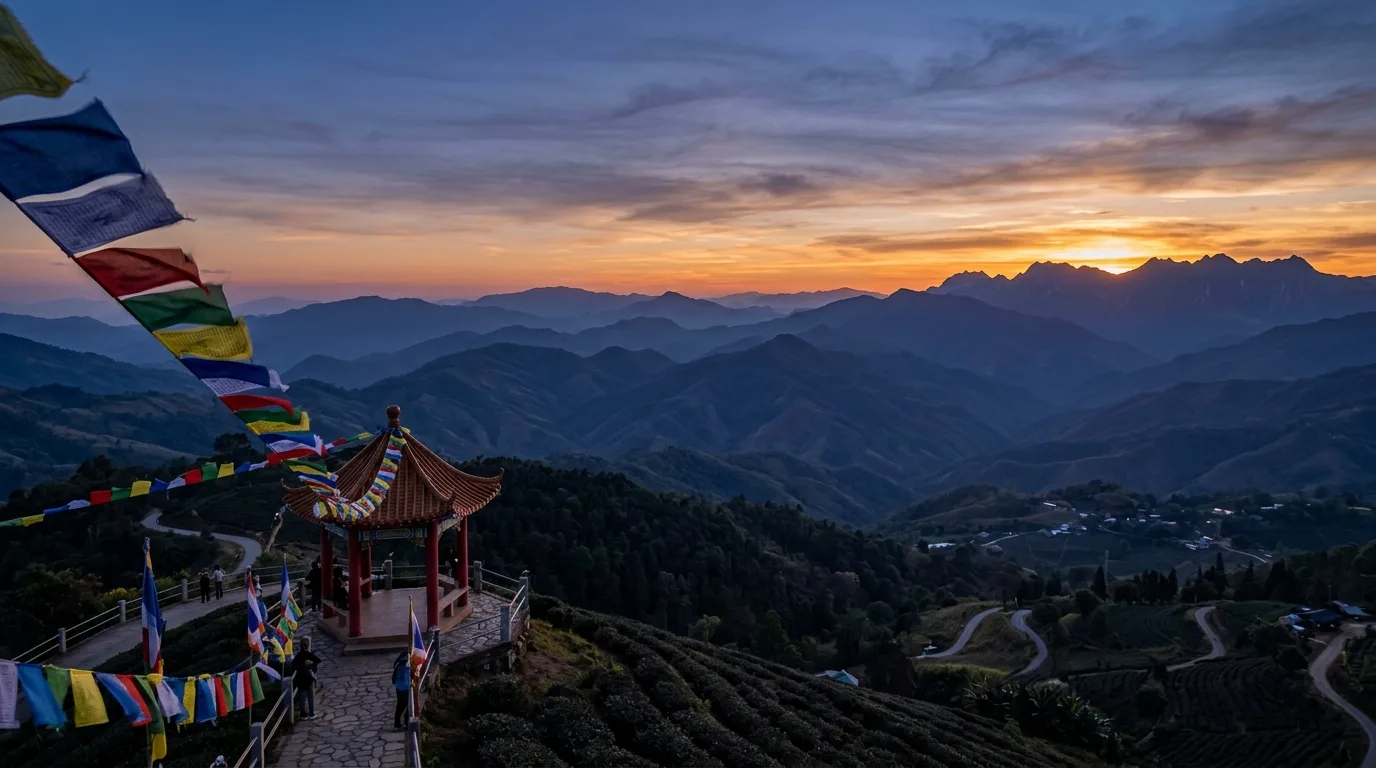
Chinese-style hilltop temple with panoramic views over tea-covered mountains.
Hiking to Hill-Tribe Villages
Akha, Lisu, and Yao villages scattered in the surrounding mountains. Guided treks available.
Food & Dining
ก๋วยเตี๋ยวจีนยูนนาน
Yunnanese Noodles
Hand-pulled or knife-cut noodles in rich broth. The morning market and main-street shops serve excellent versions.
35-60
Morning market and main street noodle shops
ซาลาเปา
Mantou (Steamed Buns)
Plain and filled varieties of Chinese steamed buns, a breakfast staple unique to this village in Thailand.
10-25
Morning market (6-8 AM)
ข้าวขาหมู
Stewed Pork Leg (Yunnan-Style)
Tender braised pork with Chinese spices over rice, richer and more fragrant than the central Thai version.
40-60
Main street restaurants
ซุปสมุนไพรจีน
Chinese Herbal Soups
Medicinal and warming soups popular in the cool months, made with traditional Chinese herbs.
50-80
Local restaurants in cool season
ไวน์ผลไม้
Fruit Wine
Local wines made from lychee, passion fruit, and plum. A unique local product.
100-300 per bottle
Tea and wine shops on the main street
Night Markets
- Morning market (early AM)
Food Streets
- Main street (ridge-top road)
Accommodation
Hostel Dorm
200 - 400
THB / night
Budget Hotel
300 - 600
THB / night
Mid-Range
700 - 1,500
THB / night
Luxury
1,500 - 3,500
THB / night
Studio /mo
3,000 - 5,000
THB / night
1BR /mo
4,000 - 6,000
THB / night
Best Areas for Tourists
Best Areas for Long Stay
Booking Tip
During cherry blossom season (late December to early January) and cool-season weekends, Thai tourists book up the best places. Reserve ahead.
Getting There from Bangkok
Flight to Chiang Rai + drive
1.5 hours flight + 1.5 hours
1,500-4,000 + fuel THB
Bus to Chiang Rai + songthaew
12 hours + 2 hours
500-800 + 100-150 THB
Getting Around
Walking
WidespreadThe village itself is walkable along the single ridge-top road.
Free
Motorbike rental
LimitedEssential for tea plantations and surrounding areas. Steep roads require confident riders.
200-300/day
Neighborhoods
Main Street (Village Center)
Chinese mountain villageTea shops, restaurants, guesthouses, the morning market, and the KMT memorial. Everything is along a single ridge-top road.
Best for: Tea tasting and food
Upper Village / Temple Area
Quiet, scenicWat Santikhiri and viewpoints. Quieter, with some resorts on the hillside.
Best for: Views and peaceful stays
Festivals & Events
Cherry Blossom Season
Himalayan cherry trees bloom across the mountain drawing thousands of Thai visitors. Village hosts flower viewing events.
Chinese New Year
ตรุษจีน
Celebrated with more enthusiasm than elsewhere in Thailand. Lion dances, firecrackers, red decorations, and special foods.
Tea Harvest Season
Visit during harvest to see tea being picked and processed at plantations across the hillsides.
Practical Info
Hospital
Mae Chan Hospital (1.5 hours)
Best SIM Provider
AIS
ATM Availability
Limited
Language Tip
Mandarin Chinese is the daily language. Thai in official settings. Very little English. Knowing basic Mandarin is more useful than English here.
Drinking Water
Drink bottled water only.
Tipping Culture
Not expected
7-Eleven Density
Sparse
Emergency Numbers
Tourist police 1155, Emergency 191
Day Trips
Akha and Lisu Hill-Tribe Villages
Traditional hill-tribe communities in the surrounding mountains, accessible by motorbike or guided trek.
Mae Sai (Myanmar Border)
Thailand's northernmost point with a Myanmar border market.
Golden Triangle & Chiang Saen
The meeting point of three countries and ancient Lanna ruins on the Mekong.
Nearby Cities
Frequently Asked Questions
Why does this place feel like China?
Because it was founded by Chinese Nationalist (KMT) soldiers who fled Yunnan in 1949. Three generations later, the community maintains Yunnanese language, food, and tea culture.
Is the tea good?
Yes. High-altitude oolong and jin xuan from Doi Mae Salong are genuinely excellent. Prices are very reasonable compared to buying the same tea in Bangkok or abroad.
Do I need a motorbike?
For the village itself, no. For tea plantations, viewpoints, and hill-tribe villages, yes. The roads are steep. Confident riders only.
How cold does it get?
Cool season nights can drop to 5-10 degrees Celsius. Days are pleasant at 15-25 degrees. By Thai standards this is cold. Bring layers and a fleece.
Can I combine this with other Chiang Rai attractions?
Yes. A common circuit is Chiang Rai city, Doi Mae Salong, Mae Sai, Golden Triangle, and Chiang Saen over 3-5 days.
What is Santikhiri?
The official Thai name for Doi Mae Salong, meaning Hill of Peace. It was renamed in the 1980s when the community was granted Thai citizenship.