
Nan
น่าน · Nan Province
Population
23K
Budget / Month
$245
Internet
40 Mbps
Best Season
November to February (cool season, sea of mist)
About Nan
Nan is one of the most remote and least visited provinces in northern Thailand, nestled in a narrow valley between the Phi Pan Nam mountains near the Laotian border. Despite having its own airport and a handful of daily flights from Bangkok, the town sees remarkably few foreign visitors. For Thai travellers, Nan has become increasingly popular as a domestic tourism destination, but the foreign backpacker trail has largely passed it by — and that is precisely what makes it special.
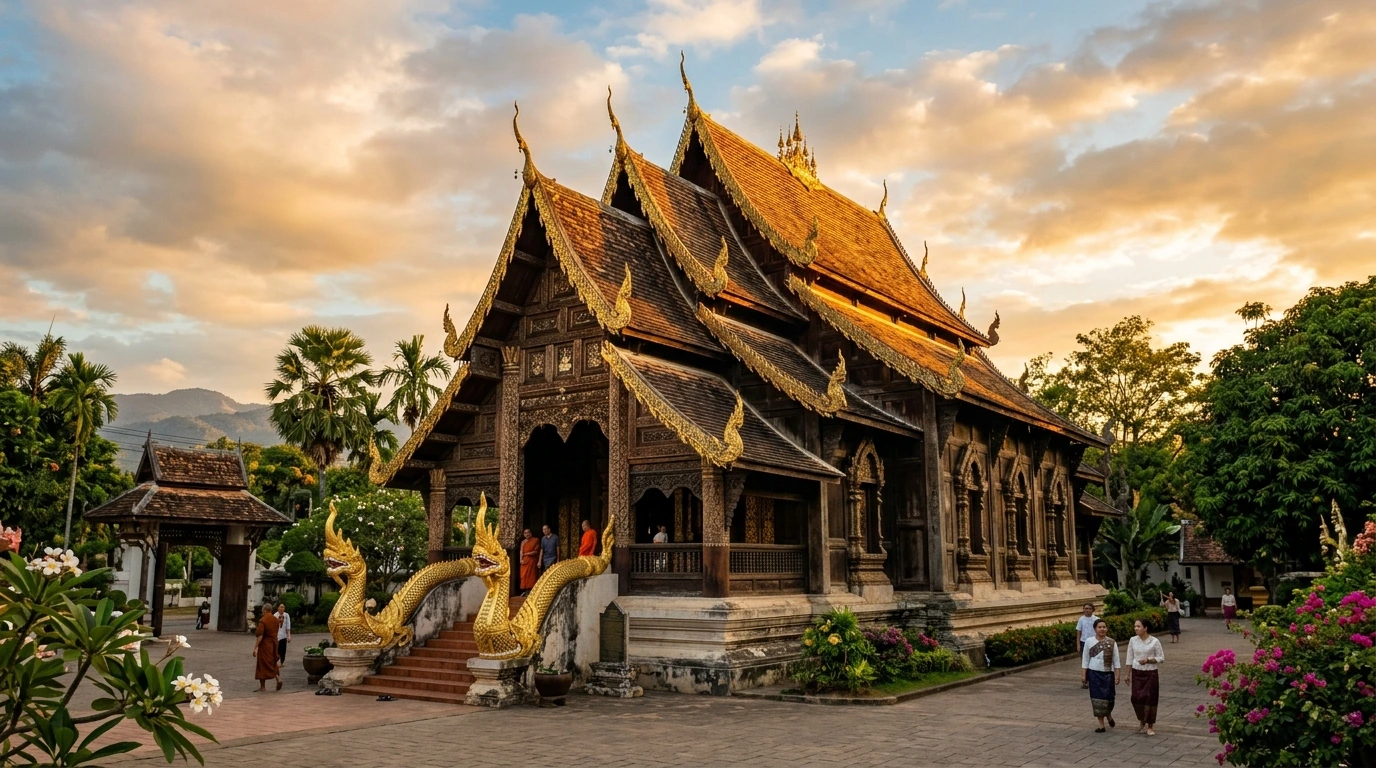
The town itself is small and quiet, centred on a modest grid of streets that can be walked end to end in half an hour. But within that compact area lie some of northern Thailand's finest temples. Wat Phumin is Nan's crown jewel, famous for the 'Whispering Lovers' mural — an intimate depiction of a couple leaning toward each other that has become one of the most reproduced images in Thai art, appearing on stamps and the one-baht coin. The mural is part of a larger cycle of paintings that blends Buddhist stories with everyday Nan life of the 19th century, rendered in a distinctive local style that differs markedly from central Thai art.
Nearby, Wat Phra That Chae Haeng sits on a hill overlooking the valley, its golden chedi visible from across the town. The Nan National Museum, housed in the former palace of the Nan rulers, contains the famous black elephant tusk and traces the province's unique history as a semi-independent kingdom that maintained its own ruling family well into the 20th century, longer than almost any other northern Thai principality.
Beyond the town, Nan Province opens up into some of Thailand's most spectacular mountain scenery. Doi Phu Kha National Park is home to the rare Chomphu Phu Kha tree that blooms pink in February, and its 1,980-metre peak offers views stretching to the Laotian mountains. The village of Bo Kluea, accessible by a winding mountain road, has mined salt from subterranean wells for centuries — a practice found nowhere else in Thailand. The salt terraces and the surrounding Tai Lue weaving villages make for one of the country's most memorable day trips.
Nan has become something of a cycling mecca in Thailand. The quiet roads, dramatic mountain passes, and stunning valley scenery attract serious cyclists from Bangkok and beyond. The annual Nan Challenge cycling race draws thousands of participants. Even casual cyclists will find that renting a bicycle and riding through the rice paddies surrounding the town is one of the most peaceful experiences in the country.
The cool season from November to February transforms the mountains into a photographer's dream. The famous 'sea of mist' phenomenon blankets the valleys in white cloud that burns off by mid-morning, and the mountain viewpoints at Doi Samer Dao and Bo Kluea are among the most dramatic sunrise spots in Thailand. Night temperatures can drop to single digits in December and January, making Nan one of the coldest places in the country — a welcome novelty for heat-weary travellers.
Practically, Nan is remote and basic. English is virtually unspoken. Internet is slow compared to larger cities. The restaurant scene is limited to local Thai food, which is excellent but unvaried. There are no coworking spaces, no international restaurants, and no nightlife to speak of. But for those who reach it, Nan offers something increasingly rare in Southeast Asia: a beautiful, culturally rich place that has not been reshaped by tourism.
Historical Note
Nan was founded as an independent principality in 1368 and maintained semi-autonomous rule under its own royal family until 1931, making it one of the last northern Thai kingdoms to be fully integrated into the modern Thai state. Its remote location near the Laotian border preserved unique cultural traditions including distinctive temple art and the Tai Lue weaving heritage. The province's isolation made it a stronghold for communist insurgents in the 1960s-1970s, and its modern opening to tourism has been slow and largely domestic.
Best time to visit: November to February (cool season, sea of mist)
At a Glance
Thai Name
น่าน
Province
Nan
Region
Northern
Population
23,000
Area
11,472 km²
Elevation
210 m
Postal Code
55000
Airport
NNT
Founded
1368
Local Language
Thai (Northern/Lanna dialect; Tai Lue minority language in rural areas)
Cost of Living
budget
/month8,500 THB
~$245 USD
comfortable
/month16,000 THB
~$460 USD
luxury
/month30,000 THB
~$860 USD
food
| Item | Low (THB) | High (THB) |
|---|---|---|
| Street food meal (noodles / rice dish) | 30 | 50 |
| Khao piak sen (Nan noodles) | 35 | 50 |
| Local restaurant meal | 50 | 90 |
| Coffee at a local cafe | 30 | 60 |
| Beer (large bottle) | 55 | 80 |
| Sticky rice (per bag) | 5 | 10 |
| Som tum + kai yang + sticky rice | 45 | 70 |
| 7-Eleven snack meal | 25 | 50 |
accommodation
| Item | Low (THB) | High (THB) |
|---|---|---|
| Guesthouse (fan room) | 200 | 400 |
| Budget hotel (air-con) | 350 | 600 |
| Boutique guesthouse | 600 | 1,500 |
| Best hotel in town | 1,200 | 2,500 |
| Monthly room/apartment | 2,500 | 5,000 |
transport
| Item | Low (THB) | High (THB) |
|---|---|---|
| Bicycle rental (per day) | 50 | 100 |
| Motorbike rental (per day) | 150 | 250 |
| Songthaew within town | 10 | 20 |
| Flight to Bangkok (one way) | 1,500 | 3,500 |
| Bus to Bangkok | 400 | 700 |
utilities
| Item | Low (THB) | High (THB) |
|---|---|---|
| Mobile data SIM (30 days, 30GB) | 200 | 400 |
| Laundry (per kg) | 25 | 40 |
entertainment
| Item | Low (THB) | High (THB) |
|---|---|---|
| Doi Phu Kha National Park entrance | 300 | 300 |
| Nan National Museum entrance | 150 | 150 |
| Tai Lue weaving workshop | 200 | 500 |
Internet & Connectivity
Speed Test Averages
vs Bangkok Average (200 Mbps)
20% of Bangkok speed
Providers
Coworking Spaces
0
Weather & Climate
November to February for cool weather, sea of mist, and the Chomphu Phu Kha bloom (February). Avoid February to April for burning season smoke, which can severely impact air quality and visibility.
Burning Season Warning
Nan Province is significantly affected by burning season from late February through April. Agricultural burning and forest fires in the mountainous terrain produce heavy smoke and haze, with PM2.5 levels often reaching unhealthy levels. Outdoor activities, mountain viewpoints, and cycling are severely impacted. The sea of mist becomes a sea of smoke. If you are sensitive to air pollution or planning outdoor adventures, avoid visiting during this period. Check real-time AQI readings before traveling.
| Month | High °C | Low °C | Rain (mm) | Humidity |
|---|---|---|---|---|
| Jan | 28 | 12 | 5 | 60% |
| Feb | 31 | 13 | 5 | 52% |
| Mar | 35 | 17 | 15 | 48% |
| Apr | 36 | 21 | 50 | 55% |
| May | 34 | 23 | 150 | 70% |
| Jun | 32 | 23 | 120 | 75% |
| Jul | 32 | 23 | 140 | 78% |
| Aug | 31 | 23 | 200 | 80% |
| Sep | 31 | 22 | 220 | 82% |
| Oct | 31 | 20 | 100 | 75% |
| Nov | 29 | 17 | 25 | 68% |
| Dec | 27 | 13 | 5 | 62% |
Things to Do
Wat Phumin
วัดภูมินทร์
Nan's most famous temple, home to the iconic 'Whispering Lovers' mural — one of the most celebrated paintings in Thai art, also depicted on the one-baht coin.
Doi Phu Kha National Park
อุทยานแห่งชาติดอยภูคา
Mountain park with the 1,980m peak, rare Chomphu Phu Kha trees that bloom pink in February, and spectacular viewpoints over the Nan valley.
Bo Kluea Salt Wells
บ่อเกลือ
Ancient village where salt has been mined from subterranean wells for centuries — a practice unique in Thailand. The salt terraces and surrounding Tai Lue villages are fascinating.
Nan National Museum
พิพิธภัณฑสถานแห่งชาติน่าน
Beautifully restored palace of the Nan rulers housing the famous black elephant tusk, historical artifacts, and displays tracing Nan's unique semi-independent history.
Cycling the Nan Valley
World-class road cycling through quiet roads, rice paddies, and mountain passes. The Nan valley offers some of Thailand's best cycling with minimal traffic.
Wat Phra That Chae Haeng
วัดพระธาตุแช่แห้ง
Hilltop temple with a 55-metre golden chedi visible from across the Nan valley. One of the most important religious sites in northern Thailand, believed to house a relic of the Buddha.
Doi Samer Dao (Stargazing)
ดอยเสมอดาว
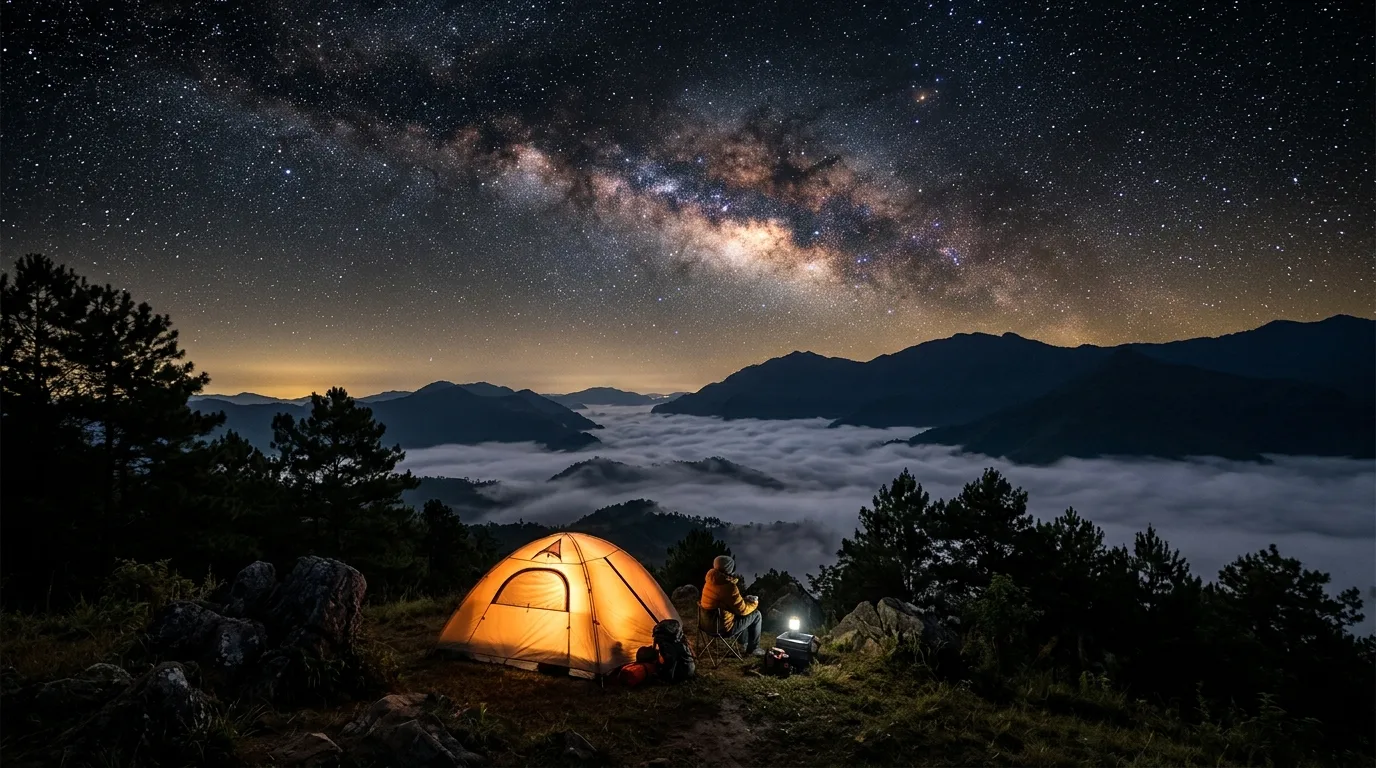
Mountain viewpoint in Sri Nan National Park famous for stargazing and the sea of mist phenomenon at sunrise. Camping on the grassy summit is a magical experience.
Nan Walking Street
ถนนคนเดินน่าน
Weekend walking street market with local handicrafts, Tai Lue textiles, northern Thai food, and a relaxed local atmosphere.
Sao Din Na Noi (Earth Pillars)
เสาดินนาน้อย
Otherworldly erosion formations creating towering earth pillars and canyons in a dry landscape. Sometimes called Thailand's Grand Canyon.
Tai Lue Weaving Villages
Visit villages where the Tai Lue ethnic minority preserves centuries-old weaving traditions, producing distinctive patterned textiles on traditional looms.
Food & Dining
เข้าเปียกเส้น
Khao Piak Sen
Thick, hand-pulled rice noodles in clear pork broth with minced pork and crispy garlic — a comforting Nan specialty with a unique chewy texture.
35-50
Morning markets and noodle shops throughout town. The stalls near the Nan River are popular locals' choices.
ข้าวค่ำ
Khao Kam
Purple-black heirloom sticky rice unique to the Nan valley, with a slightly nutty flavour and striking dark colour. Served alongside northern Thai dishes.
10-20 per serving
Local restaurants and the walking street market. Also available as dried rice to take home from the morning market.
น้ำพริกหนุ่ม
Nam Prik Noom
Roasted young green chili dip pounded with garlic and shallots — a northern staple that Nan does exceptionally well, served with sticky rice and raw vegetables.
30-50
Any local restaurant or khantoke dinner
ไส้อั่ว
Sai Oua (Nan style)
Northern Thai herb sausage packed with lemongrass, galangal, kaffir lime, and chili. Nan's version tends to be milder and more herb-forward than Chiang Mai's.
40-70
Walking street market and morning markets. Some temples sell them at merit-making events.
ข้าวซอยน่าน
Khao Soi Nan
Nan's version of the famous northern curry noodle soup, similar to Chiang Mai's but often made with a slightly thinner, less coconut-heavy broth.
40-60
Noodle shops around the town centre — look for the yellow flag signs
เมี่ยง
Miang (Tea Leaf Wraps)
Fresh tea leaves wrapped around roasted coconut, ginger, lime, peanuts, dried shrimp, and chili — a traditional northern Thai snack that is increasingly rare elsewhere.
30-50
Walking street market and traditional restaurants. Some villages near Bo Kluea produce their own tea leaves.
Night Markets
- Nan Walking Street (Friday-Saturday)
- Nan Night Market (nightly, smaller)
Food Streets
- Sumonthewarat Road (town centre)
- Near Wat Phumin area
Accommodation
Hostel Dorm
150 - 250
THB / night
Budget Hotel
300 - 500
THB / night
Mid-Range
500 - 1,200
THB / night
Luxury
1,200 - 3,000
THB / night
Studio /mo
2,500 - 4,500
THB / night
1BR /mo
3,500 - 6,000
THB / night
Best Areas for Tourists
Best Areas for Long Stay
Booking Tip
Book ahead during cool season weekends (November-February) when Thai tourists flock for the sea of mist. The boutique guesthouses fill up quickly. During the week, you can walk in anywhere.
Getting There from Bangkok
Nan Nakhon Airport
Airport Code: NNT
Flight
1h 15min
1,500-3,500 THB
Bus
10-11h
400-700 THB
Train to Phitsanulok + Bus
10-12h
400-1,200 THB
Getting Around
Bicycle
WidespreadThe best way to explore the flat town centre and surrounding rice paddies. Many guesthouses lend bikes for free or rent them cheaply.
50-100/day or free from guesthouse
Motorbike rental
LimitedEssential for reaching Bo Kluea, Doi Phu Kha, and outlying attractions. Roads outside town are scenic but winding.
150-250/day
Songthaew
LimitedVery limited public transport within town. Some routes to surrounding villages but schedules are infrequent and unreliable.
10-30
Walking
LimitedThe town centre is very compact and flat — you can walk between all the main temples and the museum in 30 minutes.
Free
Neighborhoods
Town Centre (Wat Phumin area)
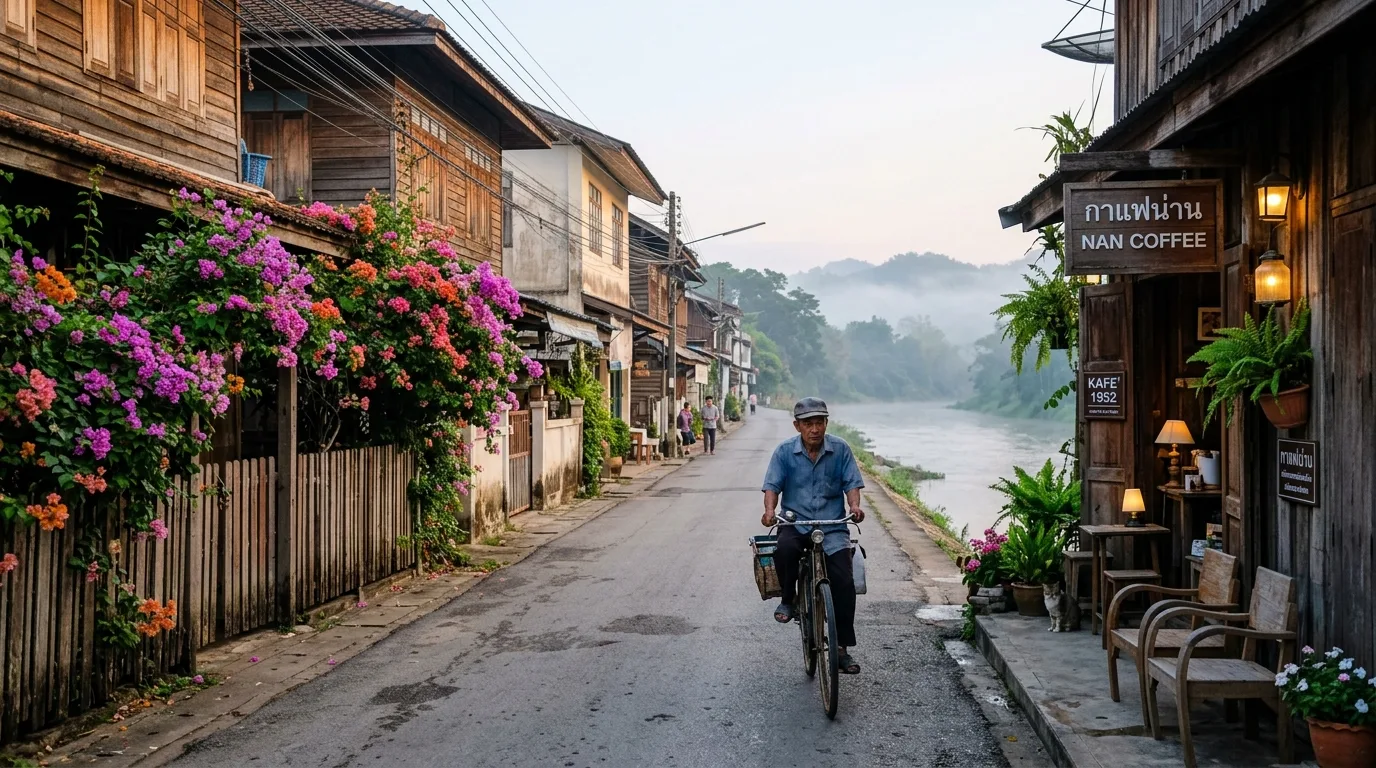
Quiet and charming — feels like a Thai town from decades ago, with wooden houses and temple bellsThe compact historic core with the main temples, national museum, cafes, guesthouses, and the walking street market all within a few blocks.
Best for: Temples, culture, eating, walking — everything is here
Nan Riverside
Peaceful and green with river breezesArea along the Nan River on the eastern edge of town with some boutique accommodations and scenic walking/cycling paths.
Best for: Relaxation, scenic views, morning walks
Phu Phiang / Outskirts
Agricultural countryside with mountain backdrops — quintessential northern Thai scenerySemi-rural area surrounding the town with rice paddies, small villages, and access roads to mountain attractions.
Best for: Cycling, rural scenery, quieter accommodation
Festivals & Events
Nan Boat Racing Festival
แข่งเรือยาวจังหวัดน่าน
Traditional longboat races on the Nan River drawing teams from across the province. One of the most exciting and photogenic festivals in northern Thailand, with elaborately decorated boats and thousands of spectators.
Chomphu Phu Kha Bloom Festival
เทศกาลชมพูภูคา
Annual bloom of the rare Chomphu Phu Kha trees on Doi Phu Kha, turning the mountainside pink. Guided hikes and camping events are organised during peak bloom.
Loy Krathong / Yi Peng
ลอยกระทง
Floating krathong on the Nan River and sky lanterns released over the valley. Nan's intimate scale makes this celebration particularly atmospheric compared to larger cities.
Songkran
สงกรานต์
Thai New Year celebrations with water throwing, merit-making at temples, and traditional northern Thai ceremonies. Nan's Songkran is gentle and family-oriented.
Practical Info
Hospital
Nan Hospital
Best SIM Provider
AIS — best coverage in the province including mountain areas. Coverage weakens significantly in remote mountain villages and national parks.
ATM Availability
Common
Language Tip
Almost no English spoken anywhere. This is not a tourist town — learn basic Thai phrases or rely heavily on a translation app. Even at hotels, English may be very limited. Google Translate's camera function is invaluable for menus and signs.
Drinking Water
Do not drink tap water. Bottled water is 7-10 THB. Refill stations exist but are less common than in larger cities.
Tipping Culture
Not expected or practised. Most locals would be confused by a tip. Simply saying 'khob khun khap/ka' (thank you) is more than enough.
7-Eleven Density
Common
Emergency Numbers
Tourist police: 1155, Ambulance: 1669, Police: 191, Nan Hospital: 054-710-138
Day Trips
Bo Kluea Salt Wells & Tai Lue Villages
Ancient salt mining village with subterranean brine wells, salt terraces, and nearby Tai Lue ethnic minority weaving villages. The drive through the mountains is spectacular.
Doi Phu Kha National Park
Mountain national park with the rare Chomphu Phu Kha trees, 1,980m summit, and breathtaking viewpoints. The highest road in the province.
Sao Din Na Noi (Earth Pillars)
Dramatic erosion formations creating otherworldly earth pillars and canyons. Best in afternoon light when shadows create dramatic patterns.
Doi Samer Dao (Sunrise & Sea of Mist)
Mountain summit with Thailand's most famous sea of mist phenomenon. Camp overnight for the magical sunrise when white clouds fill the valleys below.
Nearby Cities
Frequently Asked Questions
How do I get to Nan?
Fly from Bangkok (Nok Air or AirAsia, 75 minutes, 1,500-3,500 THB) or take an overnight bus (10-11 hours, 400-700 THB). There is no train to Nan — the nearest station is Phitsanulok (4 hours by bus).
Is Nan worth the effort to reach?
If you want to see Thailand untouched by mass tourism, absolutely yes. The temples are exquisite, the mountain scenery is dramatic, the cycling is world-class, and you will have an authentic experience impossible in more accessible destinations. It rewards travellers who value authenticity over convenience.
How many days should I spend in Nan?
Three to four days minimum. One day for the town temples and museum, one day for Bo Kluea, one day for Doi Phu Kha or Sao Din, and ideally an overnight at Doi Samer Dao. Cyclists could happily spend a week.
Is there burning season smoke in Nan?
Yes, significantly. Nan Province is affected by agricultural burning and forest fires from late February through April. Air quality can be very poor with PM2.5 levels frequently exceeding safe limits. Visibility drops, outdoor activities suffer, and the famous viewpoints are obscured. Visit November to early February to avoid this.
Can I work remotely from Nan?
It is technically possible but challenging. There are no coworking spaces. Internet speeds are slow (30-50 Mbps at best). Few cafes are laptop-friendly. Mobile data on AIS is your best backup. Nan is better suited as a short visit rather than a work base.
How cold does it get in Nan?
Nan is one of Thailand's coldest places in the cool season. December-January nights can drop to 5-10C in town and near freezing at mountain summits. Bring warm layers if visiting November-February — heating is not available in most accommodations.
Is Nan safe?
Extremely safe. It is a small, quiet, rural town with very low crime. The biggest risks are motorbike accidents on mountain roads and sunburn/dehydration during hot season. Standard precautions apply.
What should I bring to Nan?
Warm layers for cool season, sun protection year-round, mosquito repellent, a good offline map (Google Maps works but coverage can be spotty), and a translation app. If cycling, bring your own padded shorts and quality helmet.